
Texas Abandoned Vehicle Title Process: The Step-by-Step Guide
A financed vehicle that remains unclaimed at a storage facility may appear to be a straightforward repossession, but additional legal considerations may apply. If the tenant is an active-duty service member, federal law, specifically the Servicemembers Civil Relief Act (SCRA), presents challenges to anyone interested in selling or re-titling that vehicle. Under the SCRA, a person would be required to procure a court order regardless of how long the vehicle has been sitting in storage.
Texas has a defined process for an abandoned vehicle title, and the process is more straight to the point if the owner is a civilian. However, when there’s an active duty service member or other individual protected by the SCRA involved, the rules are different. The lienholder retains a financial interest in the transaction.
This guide outlines the Texas abandoned vehicle title process, including procedural requirements and considerations when SCRA protections may apply.
What Makes a Vehicle “Abandoned” Under Texas Law
Finding a vehicle abandoned on public or private property may appear to present an opportunity for title acquisition. Failure to meet the legal threshold may affect eligibility for title processing. Texas Transportation Code Chapter 683 governs the criteria and procedures for abandoned vehicle title processing.
According to this legislation, a vehicle is considered abandoned if it’s inoperable, above five years old, and left unattended on public property for at least 48 hours. It also counts as abandoned if the vehicle was left on private property without the owner’s consent for a minimum of 48 hours, left on a highway or illegally parked for at least 24 hours, or is an impounded commercial vehicle with an unpaid penalty after 11 days.
There’s a difference between abandoned and junked. A vehicle is considered junked when wrecked, dismantled, or inoperable and visible from public view. The distinction is worth noting because different legal procedures apply to a ‘junked’ vehicle compared to an ‘abandoned’ one.
The Texas Abandoned Vehicle Title Process: Step by Step
Step 1 — Report the Vehicle to Law Enforcement
The first step requires one to file a report with local law enforcement or the Texas Department of Motor Vehicles. (TxDMV). The report typically includes vehicle details such as make, model, color, license plate number, Vehicle Identification Number (VIN), and location. The law enforcement agency will then verify if the vehicle is stolen. If the vehicle was abandoned on private property, the vehicle may be tagged for 48 to 72 hours to allow the owner to move it before authorizing a tow.
The police report number serves as official documentation of notification to authorities and may be required for subsequent administrative or insurance processes. Moreover, insurers often ask for a police report number to initiate a stolen vehicle claim. If the applicant plans to take legal ownership or dispose of an abandoned vehicle through a Texas demolisher, the TxDMV requires one to show this document.
If no action is taken, follow-up may occur through non-emergency channels, in-person visits, or formal complaints submitted to the appropriate department or TxDMV.
Step 2 — Vehicle Is Taken Into Custody and Stored
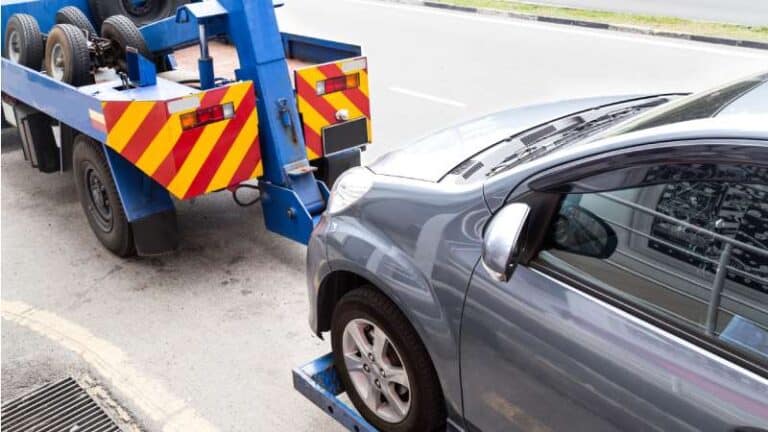
The next step is that law enforcement or a towing company removes the vehicle to a licensed Vehicle Storage Facility (VSF). It is required for the VSF to send the first notice within 5 days for Texas-registered vehicles or 14 days for out-of-state vehicles.
A second notice is to be sent between the 15th and 20th day after the first one was given. The notice is required to contain the car details, such as year, make, model, VIN, storage location, right to claim within 20 days, and consequences of failing to claim. If the vehicle doesn’t have plates and the VIN is unreadable, the National Motor Vehicle Title Information System (NMVTIS) is to be checked to identify ownership.
Step 3 — The 20-Day Notification and Waiting Period
The TxDMV publishes a list of abandoned motor vehicles when no record is found. The owners and lienholders are given 20 days from the date the notice is mailed or posted to come forward and claim the abandoned vehicle. However, they are required to pay the necessary towing and storage fees to reclaim the vehicle.
On the 21st day, if the vehicle remains unclaimed, a certificate of authority is issued. This means that the owner or lienholder waives all rights, title, and interest in the vehicle, acting as legal consent to dispose of it.
Step 4 — Apply to TxDMV for Authority to Dispose or for Title Transfer
To facilitate the title transfer or dispose of the vehicle in Texas, the process requires submission of Form VTR-71-2: Application for Authority to Dispose of a Motor Vehicle to a Demolisher. This form has a $2 application fee, which may be paid by check or money order. Cash or credit payment isn’t accepted.
To apply for this form, the application typically includes the following documents:
- Texas Certificate of Title (if last titled in Texas and not lost/destroyed)
- Out-of-state title (if titled outside Texas, must be in applicant’s name)
- Valid ownership evidence if applicant is not the recorded owner: manufacturer’s certificate of origin, registration receipt, law enforcement auction sales receipt
- Police or tow company reports
- Proof of identity
The documents are to be sent to TxDMV Vehicle Titles and Registration Division, Title Control Systems, Austin, TX 78779-0001.
Step 5 — Receive the Certificate of Authority or New Title
An applicant is entitled to receive a Certificate of Authority if the abandoned vehicle wasn’t claimed 21 days after the notice was sent out. Auction buyers use the auction receipt and Form 130-U at their county tax assessor-collector to register and receive a Texas title. Likewise, they are to shoulder the fees associated with the form.
The title is issued free of prior liens when properly processed through law enforcement auction. While the transfer documentation is processed, digital TxDMV systems are often used for efficient, secure registration. However, it is possible to request a paper title from TxDMV within four to six weeks. There are penalties to be paid if the registration doesn’t take place within 30 days of the sale.
Buying an Abandoned Vehicle at a Texas Law Enforcement Auction

Some people may choose to purchase an abandoned vehicle through an auction. In case no one steps up and claims a particular abandoned vehicle, law enforcement and towing companies in Texas hold monthly or quarterly public auctions. Auction information is published through local newspapers and law enforcement agency websites.
Participation generally requires a valid state-issued photo ID and, in some cases, a dealer’s license for individuals purchasing multiple vehicles annually. If one is successful at bidding at the auction, they will receive a receipt, which then allows them to apply for a Texas title free of prior ownership and liens.
One would also have to pay fees and taxes at the county tax office, which includes completing Form 130-U and 6.25% sales tax based on Standard Presumptive Value. These transactions may involve factors such as vehicle history, condition, or title status.
Vehicle Storage Facility (VSF) Obligations and the Notification Process
If one is part of a towing company or an operator at a vehicle storage facility (VSF), additional statutory duties apply within the title process. According to Texas Administrative Code §85.703 and §85.704, VSFs are required to send the first notice within 24 hours of storage (by day 5 for Texas-registered, day 14 for out-of-state). This is to be followed by a second notice between days 15–20 after the first one was published or mailed.
If the vehicle isn’t claimed by day 10 after the first notice, VSF may consider it an abandoned vehicle. However, for vehicles that are at least 10 years old and only fit for demolition, only one notice is required. That type of vehicle may be disposed of after 30 days.
However, VSFs are required to report vehicles to law enforcement to check for stolen status. For storage facilities, the daily storage fees may not be required until 24 hours after the notice is sent. Likewise, NMVTIS is to check their records when plates are missing, and the VIN is unreadable.
What Happens When the Vehicle Has a Lien or Active Financing
The procedure differs when a vehicle is financed. In these cases, a lienholder retains a recorded interest that continues through the standard abandonment notification process. Lienholders are provided notice during the 20-day period following publication or mailing and may assert their interest in the vehicle within that timeframe.
Additional considerations may apply when the vehicle owner is an active-duty service member. The Servicemembers Civil Relief Act (SCRA), including 50 U.S.C. § 3911, establishes limitations on repossession, sale, or title transfer of certain property without a court order when specific conditions are met. These provisions may apply to vehicles acquired prior to the period of active-duty service.
Certain SCRA protections may extend beyond the period of active duty for a limited duration. Federal provisions may affect how enforcement actions involving a vehicle are handled when the owner is covered under the Act.
Military status may be verified to determine whether SCRA protections are applicable in a given case, and in practice, many organizations use structured tools to verify military status before taking action.
How Military Status Verification Protects Lenders and Dealers in the Abandoned Vehicles Process
Military status verification services query data from the Defense Manpower Data Center (DMDC), maintained by the U.S. Department of Defense, to confirm active-duty status as of a specified date.
Verification results may include a report of status and, where applicable, an affidavit of military status for documentation purposes.
Verification may be conducted in connection with repossession, lien sale, auction, or title transfer processes involving a vehicle with a recorded lien or borrower.
Common Mistakes That Derail the Texas Abandoned Vehicle Title Process
The following procedural issues may affect abandoned vehicle title processing:
- Skipping the police report (this is the foundation of the entire paper trail)
- Attempting to claim title directly without following the TxDMV notification requirements
- Missing the 20-day window deadlines (VSF second notice timing)
- Paying impound/storage fees before confirming the vehicle has not been claimed or reported stolen
- Choosing the bonded title route when the formal abandoned vehicle process was the correct path, and vice versa
- Not checking for liens before purchasing at auction (though auction sales transfer title free of liens, unknown liens can complicate registration if the process was irregular)
- Failure to account for SCRA-related restrictions when applicable
- Assuming county processes are uniform (they are not — always verify locally)
- Mailing cash to TxDMV (explicitly not accepted)
- Not retaining copies of all notices, reports, and correspondence
Before You File, Additional Considerations Before Filing
The Texas abandoned vehicle title process includes defined statutory steps. When a vehicle is subject to a lien or associated with an individual who may qualify for SCRA protections, additional legal requirements may apply.
Military status verification may be used to determine whether SCRA-related restrictions are relevant to the transaction at the time of processing.
FAQs
How long does the Texas abandoned vehicle title process take from start to finish?
The timeline depends on the route taken. Under the standard law enforcement and VSF process, the 20-day notification window is the core waiting period, with the certificate of authority issued on day 21 if the vehicle goes unclaimed. From there, applying for a title at the county tax office typically takes a few additional days to a few weeks, depending on the county workload. The bonded title route takes longer — the surety bond must be obtained, and the title is considered provisional for three years before it converts to a clear title.
Can I claim title to a vehicle that someone abandoned on my private property in Texas?
Not directly. Texas law does not allow a property owner to simply claim title because a vehicle sits on their land. You must report the vehicle to local law enforcement, allow the TxDMV notification process to run its course (the 20-day window), and only then apply through the proper channels. If the vehicle is liened, you may also need to verify the owner’s military status before any disposition.
What happens to unpaid liens when I buy a vehicle at a Texas abandoned vehicle auction?
When a vehicle is properly processed through a law enforcement or storage facility auction, the buyer receives title free and clear of prior ownership and liens. The auction process, when correctly followed under Texas Transportation Code Chapter 683, extinguishes the prior lien. However, if the process was not correctly followed — including proper notification to lienholders — complications can arise. Always obtain documentation proving the auction was conducted lawfully.
Does the Servicemembers Civil Relief Act (SCRA) affect the Texas abandoned vehicle title process?
Yes, it can. If the vehicle owner is on active military duty, the SCRA may prohibit repossession, lien sale, or title transfer without a court order — even if the vehicle appears abandoned and the standard TxDMV notification process has been followed. Storage liens are also restricted under the SCRA during active duty and for 90 days after discharge. Lienholders, dealers, and vehicle storage facilities should verify military status before taking adverse action on any financed vehicle. SCRAcvs provides a fast, DMDC-based yes/no military status verification report to support that compliance step.
Can a vehicle storage facility foreclose on a vehicle owned by an active duty servicemember?
Under the Servicemembers Civil Relief Act, a vehicle storage facility cannot enforce a storage lien against an active duty servicemember’s property during the period of active duty and for 90 days following discharge. Proceeding with a lien sale without verifying military status can expose the facility to serious federal liability. SCRAcvs provides military status verification using DMDC databases to help storage facilities, lenders, and dealers confirm status before taking action.