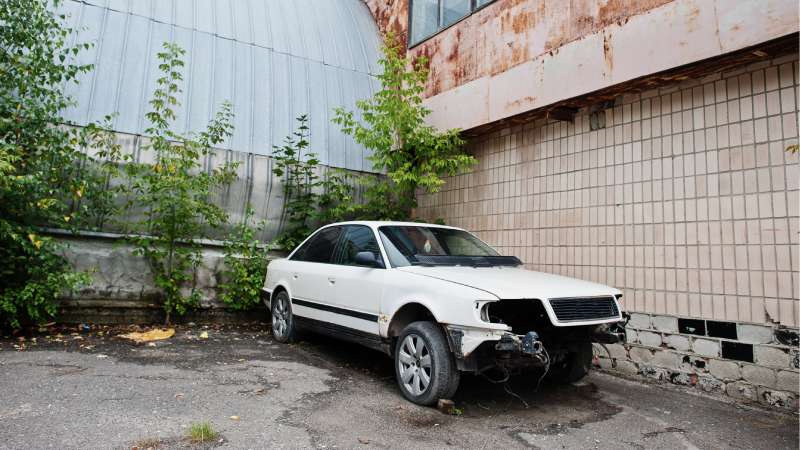
How to Get an Abandoned Vehicle Title in Missouri: Step-by-Step
When a vehicle is found on private or public property for quite some time, it’s possible to claim that vehicle’s title. However, proper protocol must be followed. One cannot simply claim that the vehicle is theirs. There are safeguards in place to protect the current owner and lienholder’s rights to the vehicle.
Understanding the Missouri abandoned vehicle title process is vital to avoiding issues in the future. This guide will detail everything one needs to know to obtain a vehicle title while following the law diligently. It discusses the relevant legislation and rules to navigate one through the claiming process with ease.
What Counts as an Abandoned Vehicle Under Missouri Law?
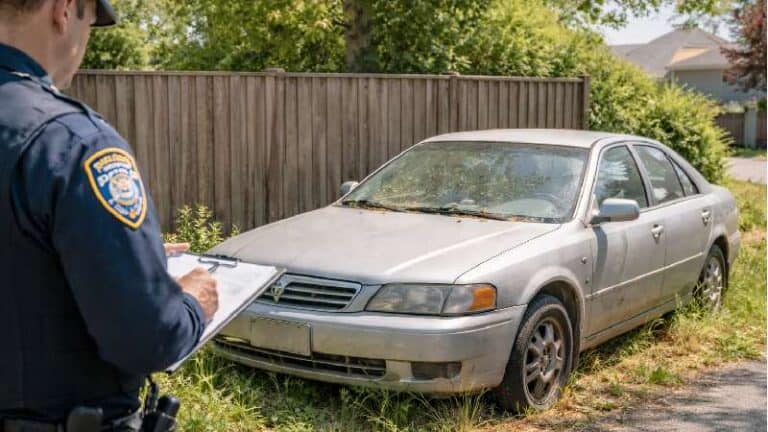
According to Missouri statutes (§ 304.001–304.155), an abandoned vehicle refers to any unlicensed or unattended vehicle that was removed or is subject to removal from private or public property. Common reasons for being classified as an abandoned vehicle include being left unattended on public property for at least 48 hours, creating a traffic hazard for at least four hours, and being left on private property without the owner’s consent.
Public property refers to public roads, while private property pertains to privately owned real estate, such as titled land or house and lots with restricted access. Meanwhile, municipality/county land means public property maintained by local authorities, like parks or government parking lots.
It is important to note that ATVs, trailers, boats/vessels, outboard motors, and watercraft follow parallel but slightly different rules. Moreover, a ‘junk vehicle’ is different from an ‘abandoned vehicle.’ In particular, a junk vehicle is defined by its conditions, while an abandoned vehicle is defined by its location and period left unattended.
Who Can Apply for an Abandoned Vehicle Title in Missouri?
Under Missouri Law, there are three main applicant categories: Towing companies, private property owners or landowners, and insurers. Towing companies are permitted to apply after the vehicle has been towed from private or public property as per § 304.155–304.158. Under § 301.193, private property owners or landowners are allowed to apply when a vehicle has been abandoned on their real estate without their explicit consent. Insurers are authorized to do so for vehicles acquired through the claims adjustment process when a negotiable title cannot be obtained.
Other potential applicants include salvage pools, salvage dealers/dismantlers, and used motor vehicle dealers. These are limited to salvage certificates or junking certificates, but abandoned vehicle titles may be of interest to them. It’s possible for a municipality or county to transfer ownership via bill of sale, but this is a separate path.
To apply for an abandoned vehicle title in Missouri, the vehicle must be abandoned without the applicant’s consent. The applicant must follow the notification steps before applying for the title.
Missouri Abandoned Vehicle Title Laws and Statutory Authority
When dealing with abandoned vehicle titles in Missouri, it would be wise for one to familiarize themselves with the following title laws and statutory authority. These include RSMo § 301.193, which discusses the private property owner/insurer pathway, and RSMo § 304.153–304.158, which refers to towing from public and private property; possessory lien; notification timeline. Meanwhile, RSMo § 301.227 delves into the towing company’s right to apply for an original, salvage, or junking certificate title.
There may also be local ordinances in the particular area where the abandoned vehicle was located. For example, select cities or towns may restrict the storage of inoperable vehicles. There are also different types of title brands: “Original,” “Salvage/Abandoned Property,” “Prior Salvage” (all out-of-state abandoned vehicles get “Prior Salvage” brand regardless of condition unless junk), and “Junking Certificate.” However, it is necessary to distinguish which statute applies to an applicant’s particular situation.
Step-by-Step Process for Titling an Abandoned Vehicle
For Towing Companies
Step 1 — Authorize and document the tow
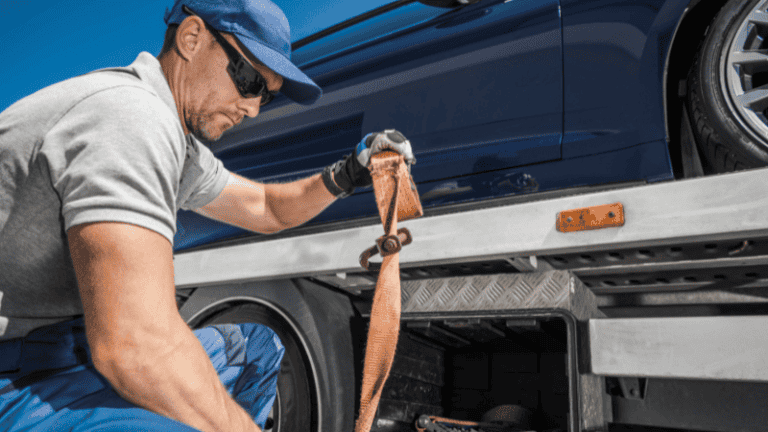
The towing company normally receives authorization from either a property owner on Form 4669, law enforcement, or a municipality. The company then reports the tow to the appropriate law enforcement agency within 2 hours. This is particularly true if the vehicle is towed from private property under reason #1 on Form 4669. The towing company is then tasked with completing its section on Form 4669.
Step 2 — Run the NCIC and DOR records check
Within ten days after the abandoned vehicle has been towed, the towing company with online access to the Department of Revenue (DOR) must query the system for registered owner and lienholder information. If there’s no online access, they must file a report to the local police/law enforcement, who then submit a Form 4569 to the DOR. At this stage, the law enforcement also runs a National Crime Information Center (NCIC) check and a statewide MO law enforcement computer to confirm the vehicle is not stolen.
Step 3 — DOR notification to towing company
The Department of Revenue then searches its records and sends a notification letter (MVB-346) to the towing company within 15 working days of completing the search. The letter identifies the owner and lienholder of record. This step is vital because it authorizes the towing company to procure the vehicle.
Step 4 — Notify owner and lienholder (Form 4577)
Before a towing company is authorized to purchase a vehicle title, they are tasked to send a Form 4577 to all identified owners and lienholders by certified mail. They then return the receipt requested within 10 business days of receiving the DOR notification.
It is required that the notice contain pertinent details, including the storage facility name/address/phone; date, reason, and place of tow; accrued and ongoing towing/storage/administrative charges; possessory lien claim; owner’s right to reclaim by proving ownership and paying charges. It also includes a statement that the unredeemed property may be sold after 30 days.
Step 5 — Hold period
The hold period for an abandoned vehicle depends on how valuable it is. For high-value or newer vehicles, there must be a hold period of at least 30 days after notification before proceeding. For low-value vehicles or those older than 6 years, more than 50% damaged, and with a fair market value under $200, there’s a hold value of at least 10 days after notice before selling to a licensed salvage/scrap business. During the hold period, the owner or lienholder may reclaim the vehicle at any time during business hours upon proof of ownership and payment of charges.
Step 6 — Assemble the title application package
The towing company is tasked with compiling the title application package once the hold period passes. These documents include the following:
- Form 108 (Application for Missouri Title and License) — completed in towing company’s name; mark “Original,” “Salvage,” or “Junking Certificate”
- Form 4576 — Abandoned Property Affidavit, signed and notarized
- Copy of Form 4577 (lienholder/owner notification)
- Copy of certified mail return receipts (must be 30 days old minimum)
- Copy of the DOR notification letter or “Record Lookup Results” screen
- Form 551 — Vehicle Examination Certificate (if applying for Original title; obtained from nearest MSHP headquarters)
- Odometer disclosure statement (if applying for Salvage or Junking Certificate and vehicle is model year 2011 or newer)
- Form 4669 — Abandoned Property Report
The towing company isn’t tasked to pay the title fee or sales tax.
Step 7 — Submit to DOR
Once all the required documents have been compiled, the complete package is to be sent via mail to the Department of Revenue, Central Branch, P.O. Box 2076, Jefferson City, MO 65105. All incomplete packages will be rejected, so it is important for the towing company to ensure they have all the requirements before sending them to the DOR.
For Private Property Owners
Step 1 — Confirm the vehicle was abandoned without consent
Private property owners must first document that the vehicle was left without consent. Legal ownership of the vehicle is not automatically transferred even though it was left on your property. RSMo § 301.193 details the legal pathway to process the ownership transfer.
Step 2 — Have the vehicle inspected by law enforcement
According to RSMo § 301.190(9), a mandatory vehicle examination or inspection is to take place before the DOR issues an original certificate of ownership for certain high-risk categories of vehicles. This procedure also confirms if the vehicle wasn’t stolen (NCIC check), the last titled owner’s name and address, and any lienholders of record.
Step 3 — Send 30-day certified mail notice (Form 5227)
It’s mandatory that all identified owners and lienholders of record be notified by certified mail at least 30 days before filing the title application. This provides the owners and lienholders the opportunity to reclaim the abandoned vehicle and settle all necessary expenses to make this transaction official.
Private property owners are to use Form 5227 — Notice to Owner(s) and/or Lienholder(s) Regarding Abandoned Vehicle, ATV, Vessel, Watercraft, Outboard Motor, and/or Trailer at this stage. If DOR records do not disclose an owner at the time of application, DOR will search further and, if found, inform the applicant so a notice can be given.
Step 4 — Assemble the title application package
Like a towing company, private property owners are expected to assemble a package to process the title ownership. Compared to a towing company, these individuals have fewer document requirements. These include a Form 108 or Application for Missouri Title and License, a law enforcement inspection report, a copy of Form 5227 notice, and a certified mail return receipt (at least 30 days old). Another requirement is the Notarized Form 4576 or Abandoned Property Affidavit.
Step 5 — Submit to DOR
Like towing companies, private property owners are tasked with submitting the complete title application package to the Department of Revenue. In particular, the package is to be sent to the Motor Vehicle Bureau, PO Box 2076, Jefferson City, MO 65105-2076. In case private individuals would like some assistance on this matter, they may contact the Missouri Department of Revenue at (573) 526-3669.
Step 6 — DOR review and title issuance
Upon receipt of the complete package, the DOR searches Missouri records. The DOR may initiate an inquiry with another state if evidence suggests the vehicle was registered or titled out of state. If the application is approved, the applicant is issued a certificate of title. The type would depend on the vehicle condition per inspection. If the lienholder contests the application, the DOR may require further documentation or administrative review.
SCRA Military Status Verification in Abandoned Vehicle Cases

When an abandoned vehicle is involved, parties verify whether the the current owner or lienholder is protected by certain laws. The Servicemembers Civil Relief Act (50 U.S.C. § 3911 et seq.) federal law protects active duty servicemembers against certain civil enforcement actions, including the sale or disposal of property with a lien or storage interest.
According to 50 U.S.C. § 3958, a person holding a lien on a servicemember’s property (including a tow company with a possessory lien) cannot enforce that lien and dispose of the vehicle without a court order during the servicemember’s period of military service and for 90 days thereafter. Select SCRA protections apply even after that servicemember’s active duty period has passed.
Standard DMV processes do not include verification of military status. A vehicle that appears unclaimed may belong to a deployed servicemember, and a court order is required if the towing company or private individual would like to purchase the abandoned vehicle.
Military status verification may be referenced in situations where SCRA protections could affect lien enforcement or property disposition. Taking this extra verification step is a precaution to ensure one respects the rights of active duty service members and other protected individuals under the SCRA.
On one hand, SCRAcvs may be of service by inquiring with the Defense Manpower Data Center (DMDC) databases maintained by the U.S. Department of Defense. Those who submit an inquiry receive a simple yes or no answer to the question ‘Is the individual on active military duty, or may they be protected under the SCRA?’
Optional affidavits of military status are available when documentation for legal proceedings is needed. It’s worth noting that SCRAcvs does not provide legal analysis, recommendations, or advice — it provides factual status verification only. Verification starts at $40, and there’s an additional $30 for FedEx mail delivery of the affidavit, if required.
Military verification may help tow companies before selling or disposing of an unclaimed vehicle after the hold period. It may also assist private property owners before applying for title on a vehicle left on their land. The service is also available to lenders or servicers before repossession or title transfer on a financed vehicle, as well as salvage pools, dealers, and insurers before processing abandoned vehicle title applications.
Getting the Missouri Abandoned Vehicle Title Right From the Start
Towing companies and private individuals looking to purchase an abandoned vehicle would be wise to confer with the statutes that guide them in their purchasing process. The § 304.155–304.158 path covers towing companies, while the § 301.193 path covers private property owners.
Regardless of what type of applicant you are, the process may be form-heavy and sequence-dependent. Errors at the notification stage invalidate everything downstream. Through services like that of SCRAcvs, you may verify a person’s active duty status and avoid the complexities that come with dealing with a service member or someone protected by the SCRA. SCRAcvs provides military status verification using DMDC data, returning a yes or no result for a specified individual and date.
FAQs
How long does the Missouri abandoned vehicle title process take?
DOR completes its records search within 15 working days; the towing company then has 10 business days to notify the owner/lienholder; the standard hold period is 30 days after that notification; then additional processing time at DOR after submission. End-to-end, the process typically takes 6 to 10 weeks minimum for a standard vehicle.
Can a private property owner get a title for a vehicle abandoned on their land without using a towing company?
Yes. RSMo § 301.193 provides a direct pathway for landowners (and insurers). They must have the vehicle inspected by law enforcement, send a certified mail notice via Form 5227 at least 30 days before applying, and submit Form 108 and Form 4576 (notarized) to DOR.
Does the Servicemembers Civil Relief Act (SCRA) affect the Missouri abandoned vehicle title process?
Yes. Under 50 U.S.C. § 3958, a towing company or lienholder holding a possessory lien on a servicemember’s vehicle cannot enforce that lien (dispose of or sell the vehicle) without a court order during the member’s active duty period and for 90 days after active duty ends. Some protections extend beyond that window. Military status should be verified before proceeding with any sale or disposal — SCRAcvs provides DMDC-sourced verification for $40.
Is a towing company required to pay title fees when applying for an abandoned vehicle title in Missouri?
No. Under Missouri law, a towing company is not required to pay the title fee or sales tax when applying for an Original, Salvage, or Junking Certificate title on an abandoned vehicle they have legally taken possession of.
What happens to abandoned vehicles that are never claimed and have very low value?
If a vehicle is older than 6 years, more than 50% damaged by collision, fire, or decay, and has a fair market value under $200 (confirmed by a certified appraiser’s affidavit), the towing company may dispose of it after only a 10-day hold period (rather than 30 days) by selling it to a licensed salvage or scrap metal business for destruction. The towing company must forward a copy of the bill of sale to the Director of Revenue within 2 weeks.