
How to Get a Title for an Abandoned Vehicle in California (Step-by-Step Guide)
Getting a title for an abandoned vehicle in California depends on who the applicant is (a private individual, towing operator, or storage facility), where the vehicle was found, and its estimated value.
California Vehicle Code §§ 22650–22711 govern abandoned vehicle procedures. CVC § 22651 establishes law enforcement authorities for vehicle removal; CVC § 22523 imposes infractions for abandonment on public or private property; CVC § 22850.3 mandates notice requirements for storage facilities; and CA Civil Code § 3068 governs possessory liens for towing and storage fees.
The Servicemembers Civil Relief Act (SCRA) adds a compliance layer for operators and storage facilities: repossessing a vehicle tied to an active-duty service member without a court order is illegal and may result in significant fines.
This guide covers every required step, form, fee, and decision point, including the vehicle value threshold that determines which lien sale process applies.
What Is Considered an Abandoned Vehicle Under California Law?
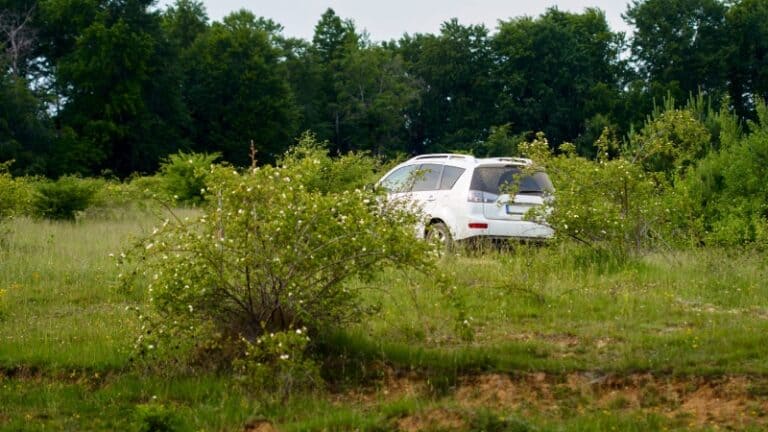
Under California Vehicle Code § 22523, leaving a vehicle on a public highway or private property without consent is illegal. A vehicle left on public roads for 72 or more consecutive hours is considered abandoned. On freeways, the CHP may expedite removal if the vehicle blocks traffic or poses a safety hazard. Vehicles abandoned on private property may be towed immediately if proper signage exists.
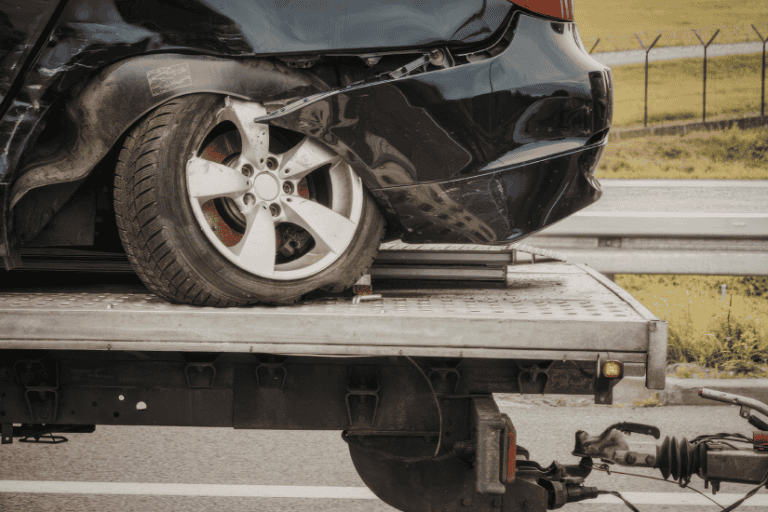
Physical indicators that confirm abandonment include inoperable condition, visible neglect, expired registration, missing license plates, major damage, and vandalism. A vehicle displaying these signs may be tagged and towed after 72 hours on public roads, even with a valid registration.

Who Can Apply for an Abandoned Vehicle Title in California?
Three applicant types may obtain a certificate of title for an abandoned vehicle in California: private individuals, licensed towing and storage operators, and lienholders.
Private individuals cannot file a lien sale or transfer a title simply because a car is on their property. Under CVC § 22658, they must remove it through a licensed towing company or acquire it from the registered owner.
Licensed operators may pursue title through the lien sale pathway and require valid DMV-regulated towing credentials. Lienholders must hold a Bureau of Automotive Repair license to recover unpaid costs.
A lien sale is a statutory public auction to clear unpaid debts; a standard title transfer is a voluntary exchange between parties.
California Abandoned Vehicle Title Pathways: Which One Applies to You?
In California, there are two distinct legal routes to resolve an abandoned title, determined strictly by who owns the property and the vehicle’s estimated value: the private individual route and the towing company or storage facility (lien sale).
Pathway 1 — Private Individual (Vehicle Found on Your Property)
A private individual may not immediately claim an abandoned vehicle left on their property. They are to report it to local law enforcement or CHP using form CHP 180 (Abandoned Vehicle Report). In case the owner isn’t located after the mandatory investigation and waiting period (96 hours or 4 days), the applicant may apply for a bonded title through the California DMV. This requires a surety bond matching the vehicle’s fair market value.
Pathway 2 — Towing Operator or Storage Facility (Lien Sales Process)
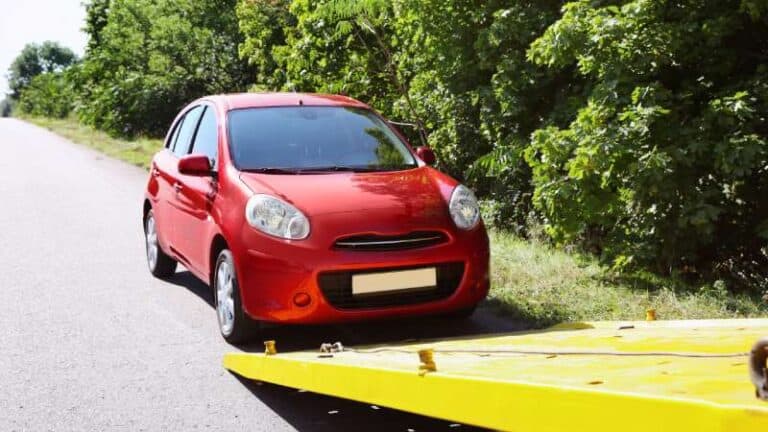
If the company legally tows a vehicle from private property under CVC § 22658, this pathway may apply. A lien sale in California is a statutory auction allowing operators to recover unpaid towing and storage fees. The DMV pipeline primarily depends on vehicle valuation. There’s a shortened, low-value lien sale procedure for vehicles valued at $4,000 or less. Vehicles valued more than $4,000 require formal DMV authorization and certified mail notifications to all legal owners.
Steps to Get an Abandoned Vehicle Title as a Private Individual in California
Step 1 — Report the Vehicle to Law Enforcement or CHP
No title action can begin until law enforcement officially documents the vehicle as abandoned. Complete the abandoned vehicle report form (CHP 180) to initiate the investigation and obtain a case number, which the DMV requires for all future title applications. Police will check the VIN against the stolen vehicle database before anything else can proceed. On state highways and freeways, CHP has jurisdiction and can bypass the standard 72-hour waiting period if the vehicle is blocking traffic or creating a hazard.
Step 2 — Run a Vehicle Ownership and Lien Search
Submit Form INF 70 (Request for Record Information) to the DMV to identify all registered owners and lienholders. The DMV charges $5 per vehicle record by mail; un-digitized microfilm copies cost $20 per year requested. Because the DMV database only covers California-registered vehicles, also run an NMVTIS search through a third-party vendor ($7–$12) to surface out-of-state titles, theft history, or salvage and flood brands.
Step 3 — Verify SCRA Status of the Registered Owner
Before any title action, verify whether the registered owner is an active-duty servicemember. Under 50 U.S.C. § 3958, repossessing a servicemember’s vehicle without a court order is illegal. Use the DoD SCRA portal or a service like SCRACVS to confirm status. This is a federal obligation — skipping it carries significant liability. If the vehicle is tied to a covered servicemember, pause the process and seek legal counsel before proceeding.
Step 4 — Send Certified Notice to the Registered Owner and All Lienholders
Under CVC § 22852, all registered owners and lienholders must receive notice by certified mail with return receipt. The notice must include vehicle details, storage location, legal authority, hearing rights, and intent to dispose. If mail is returned undeliverable, keep the unopened envelope — the DMV requires it as proof. For vehicles valued under $4,000 with no address on file, publish notice in a local county newspaper. Once delivered, a 31–41-day waiting period begins.
Step 5 — Wait Out the Statutory Holding Period
The statutory clock starts when certified letters are mailed, not when received. For vehicles valued at $4,000 or less, the minimum wait is 15 days after mailing. For vehicles above $4,000, a formal DMV authorization process triggers a 30-day waiting period. The clock pauses if the owner requests a post-storage hearing within the 10-day window or files a Declaration of Opposition — resuming only with a court judgment or formal owner release.
Step 6 — Apply for Title Through the California DMV
Submit an application packet containing Form REG 343, Form REG 256, the CHP 180 report, certified mail receipts, and a Motor Vehicle Ownership Bond if applicable. Complex abandoned vehicle packets cannot be processed online and must be submitted in person or mailed to DMV Registration Operations in Sacramento. The base title transfer fee is $28, with additional costs for back-registration penalties, smog certification, or local use taxes. Processing takes four to eight weeks.

Step-by-Step: California Lien Sale Process for Towing Operators and Storage Facilities
Likewise, licensed operators such as towing operators and storage facilities are to follow a different path to obtain an abandoned vehicle in California.
Step 1 — Determine Vehicle Value and Identify the Correct Lien Sale Threshold
A vehicle’s estimated value dictates the statutory framework that applies. Vehicles valued at $4,000 or less are governed by CVC § 22851.3, which allows an expedited lien sale without prior DMV authorization. Vehicles above $4,000 fall under CVC § 22851, requiring formal DMV authorization before the sale can proceed. Value must be determined using a licensed vehicle verifier, a public agency, or recognized industry valuation guides.
Step 2 — Submit the Abandoned Vehicle Report and Notify the DMV
Under CVC § 22853, if a vehicle is not returned to its owner within 120 hours of removal, the operator must submit a written report detailing the impoundment. Form CHP 180 establishes the initial grounds for removal and documents vehicle inventory. If the vehicle remains unclaimed, a formal report must go to the DOJ Stolen Vehicle Unit in Sacramento to confirm it is not stolen. For low-value vehicles, the public agency issues a REG 462 disposal authorization after 15 days. Missing the 120-hour deadline forfeits storage fee collection rights, and conducting a lien sale without DOJ clearance exposes the operator to civil liability and potential license suspension.
Step 3 — Conduct SCRA Verification on the Registered Owner
Before proceeding, verify whether the vehicle is tied to an active-duty servicemember. The SCRA prohibits repossession or auction of a servicemember’s vehicle without a court order. Use the DoD SCRA portal or a service like SCRACVS to confirm status. For high-volume operators, building SCRA verification into the standard intake workflow is the most reliable way to stay compliant.
Step 4 — Send Statutory Notice to Owner and All Lienholders
Under CVC §§ 22854–22855, the lien sale notice — formally, the Notice of Pending Lien Sale (Form REG 280 for higher-value vehicles) — must be sent by certified mail with return receipt exactly 20 days before the sale, to the registered owner, lienholders, all claimants, and the California DMV in Sacramento. For high-value vehicles, the notice must also be published in a local newspaper between 5 and 20 days before the auction. If no local newspaper exists, post the notice in three public spaces and at the auction yard for 10 consecutive days.
Step 5 — Observe the Mandatory Storage and Waiting Period
The vehicle must be stored for at least 30 days before a lien sale can proceed, with the clock starting on the day the lien arises. For higher-value vehicles, DMV authorization extends this to 60 or 90 days. Under California Civil Code § 3068, storage fees are capped at 60 days if the registered owner was not notified within the required timeframe, and a mechanic’s lien cannot exceed $750 for storage without prior written consent from the owner.
Step 6 — Conduct the Lien Sale and Apply for Title
Hold a formal public auction with the vehicle physically present and available for inspection at least one hour before bidding begins. If no qualifying bids are received, the lienholder may purchase the vehicle for the total accumulated lien amount. Certify the sale using Form 168A for vehicles valued at $4,000 or less, or Form 168 for those above $4,000 — not Form REG 51, which applies only to licensed auto dealers. Also submit Form REG 31 if the vehicle has no active California record, along with a smog certification if available. The base transfer fee is $28, plus any outstanding registration fees or local use taxes. The DMV takes four to eight weeks to issue the clean certificate of title.
Special Abandoned Vehicle Title Situations in California
Some situations call for different approaches to process applications.
Abandoned Vehicle on Private Property With No Police Report
A private property owner may not bypass law enforcement to claim a title. As per CVC § 22658, the local police or the CHP are to be involved to verify that the vehicle is not stolen. If law enforcement refuses to generate a report, the vehicle is classified as a trespass vehicle; one cannot acquire title and is required to hire a towing company to remove it.
Out-of-State Vehicle Abandoned in California
If the vehicle in question has out-of-state plates, a National Motor Vehicle Title Information System (NMVTIS) search is legally mandated. The California DMV mandates that one notify the registered owner and lienholders in the originating state via certified mail. If that state’s records are inaccessible, one must secure a Motor Vehicle Ownership Bond before California will issue a new title.
Vehicle Has No VIN, or VIN Is Unreadable
A title may not be processed without a clear Vehicle Identification Number (VIN). A physical inspection is to be scheduled with a licensed vehicle verifier or the CHP using Form REG 31. If the VIN is completely missing or altered, the CHP is to assign a new blue state-issued VIN tag before any DMV title pathway may continue.
Vehicle Is a Junk or Salvage Vehicle
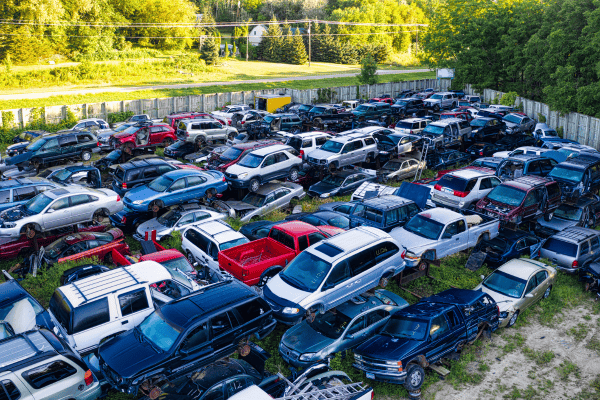
Pursuing a title is inappropriate if an abandoned vehicle is completely stripped, rusted, or missing major mechanical components. Instead, one is to use the California Junk Certificate Process (Form REG 42) or a salvage title or Salvage Certificate (Form REG 481). These forms permanently dismantle the vehicle record, allowing a scrap yard to crush or part out the vehicle without standard title transfer steps.
High-Volume Operators — Building a Compliant Intake Workflow
High-volume operators may consider establishing a standardized, multi-point intake infrastructure to prevent liabilities. Items to consider include a digital checklist, automated SCRA verification, document templating, and staff training.
Getting an Abandoned Vehicle Title in California
Getting a title for an abandoned vehicle in California requires knowing who the applicant is, what the vehicle is worth, and which process applies to establish legal ownership. Retaining documentation at every step builds a more defensible claim.
For operators, SCRA compliance is one of the most overlooked and most expensive steps to get wrong. SCRACVS makes active-duty verification instant, so operators can move through the process confidently. For case-specific guidance, contact your local California DMV field office.
FAQs
Can I get a title for an abandoned vehicle without the owner’s signature in California?
Yes, one may obtain a title without an owner’s signature, but one may not simply claim the vehicle. The applicant is to follow one of the state’s strict statutory pathways to bypass the missing signature.
Does SCRA protect a military member’s vehicle from being sold at a lien sale in California?
Yes, since the SCRA is a federal law, it covers vehicles connected to active duty service members in California. The sale may only proceed if the applicant obtains a court order.
Are towing companies in California required to verify military status before a lien sale?
Yes. SCRA verification is a federal obligation under 50 U.S.C. § 3958. Skipping it exposes the operator to federal liability regardless of state law.
What happens if a lien sale buyer discovers the vehicle belonged to an active-duty servicemember?
The sale may be invalidated if the vehicle is tied to an active duty service member. The process of obtaining the title may be halted. However, the process may proceed if the applicant obtains a court order.