How to Get a Title for an Abandoned Vehicle in Virginia: Step-by-Step Process
In Virginia, the Virginia Code § 46.2-1200 series governs the abandoned vehicle title process. The rules are administered through the Virginia Department of Motor Vehicles (DMV). Obtaining a legal title requires meticulously following a precise, time-sensitive sequence of steps, whether you’re a private landowner dealing with an unwanted vehicle, a storage facility managing recurring volume, or a towing operator. Skipping or misordering any step can invalidate your claim and expose you to civil liability.
This guide walks you through every phase of the process in the order required by Virginia law. It covers who is qualified to apply, which DMV forms to submit, and the correct process for conducting legally compliant lien searches. It will also delve into why the Servicemembers Civil Relief Act (SCRA) verification is now treated as standard protocol among professional operators in Virginia.
What Qualifies as an Abandoned Vehicle Under Virginia Law
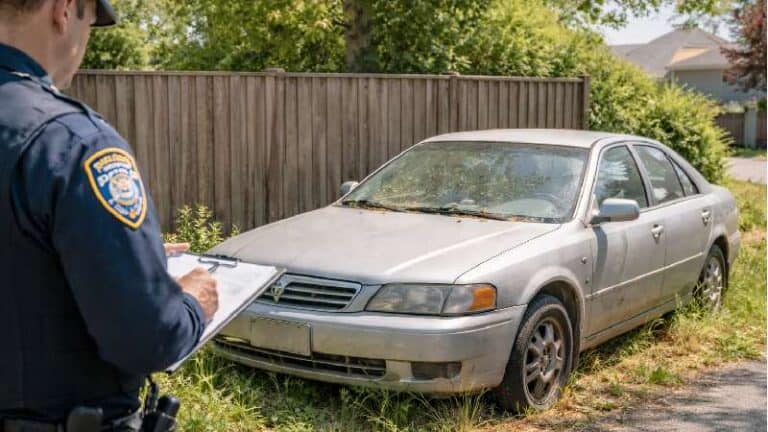
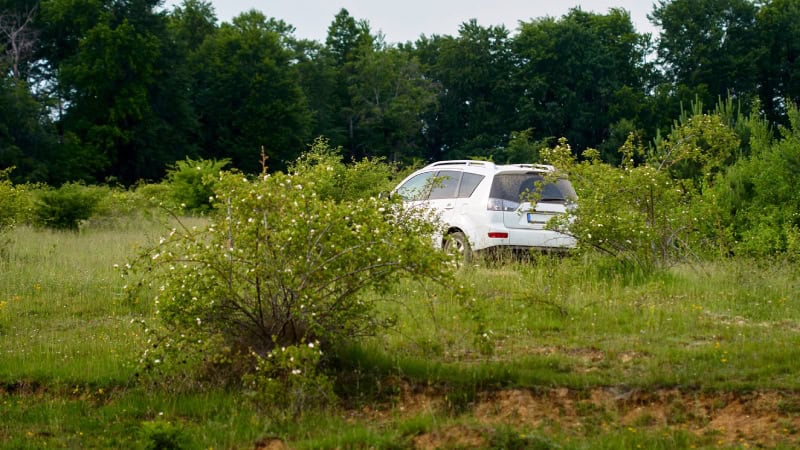
According to § 46.2-1200, an ‘abandoned motor vehicle’ in Virginia is defined as a vehicle that weighs at least 75 lbs that is left unattended on public property for at least 48 hours in violation of law or ordinance, left on private property without consent for at least 48 hours, or left on a primary shoulder.
If the vehicle was left unattended on public property, it is only considered abandoned if it was left there for a minimum of 10 days. Once this 10-day window has passed, it is subject to removal and disposition by a local government as per VA Code § 46.2-1213. However, if the said vehicle was violating state law or local ordinance for at least 48 hours, it’s already considered abandoned under the same statute.
As per the same code, a vehicle is considered legally abandoned if found on private property for a minimum of 48 hours without the owner’s explicit consent. However, the private property owner may not simply sell the vehicle, as they are required to submit a request in writing. In many municipalities in Virginia, vehicles parked on public highways with expired or no registration or without license plates are deemed a hazard or an immediate violation of local ordinances.
Who Can Apply for an Abandoned Vehicle Title in Virginia
In general, towing operators, storage facilities, local governments, and private landowners are eligible for title application for abandoned vehicles in Virginia. Individuals are permitted to request title issuance if the vehicle in question is left illegally on their private property. While individuals are to follow rules according to the Virginia DMV Abandoned Vehicle Process (AVP), businesses are subject to distinct entry points and statutory requirements.
According to Virginia Code § 46.2-1200, towing operators are businesses explicitly engaged in towing or recovering vehicles for compensation. They are to follow strict compliance rules to obtain an abandoned title. As per the Virginia Towing Recovery Improvement Act, towing operators are subject to mandatory licensing and zoning, strict insurance thresholds, predatory towing restrictions, and regulated payment methods.
Virginia Abandoned Vehicle Title Process — Step-by-Step
Following Virginia’s abandoned vehicle title procedure rules and requirements is vital to ensure the smooth acquisition of a car or motor vehicle.
Step 1 — Report the Vehicle to Law Enforcement and the Virginia DMV
Before anyone may claim ownership of a vehicle, the vehicle is to be reported to the authorities, or, in particular, follow the Virginia DMV Abandoned Vehicle Process (AVP). The applicant is to contact the non-emergency line of the local police department or county sheriff’s office if the vehicle was found on private property. The Virginia State Police is to be contacted only if the vehicle was left on an interstate highway or a state-maintained primary route.
When submitting a report, provide the full Vehicle Identification Number (VIN), the vehicle’s make, model, model year, and body type, the license plate number and state of registration (if visible), and the physical location and duration the vehicle was left unmoved.
An automated National Crime Information Center (NCIC) check is strictly mandatory before any lien is enforced or a new title is issued. If the NCIC system flags the vehicle as stolen, the AVP is stopped, and law enforcement is dispatched to secure and recover the vehicle. The Virginia DMV system typically generates an online receipt and confirmation number within three to five business days.
Step 2 — Conduct a Lien Search and Identify the Legal Owner
Applicants are required to search for the registered owner and all lienholders of record using formal record requests. A lienholder is a legal entity that holds a secured interest in the vehicle until the debt is paid in full. Under Virginia state law, all registered owners and lienholders of record are entitled to an opportunity to reclaim the vehicle.
State DMV portals are used for Virginia-registered vehicles, while out-of-state vehicles are to be checked at the respective state’s DMV or utilize national data networks to ensure all relevant parties are notified. To find the vehicle’s legal owner and lienholders, a Virginia DMV Form VSA 404 is to be submitted to request title and registration records. Alternatively, individuals and businesses may utilize the Virginia DMV Abandoned Vehicle Process (AVP) to initiate a record request and property search.

Step 3 — Conduct SCRA Military Status Verification (Required for Towing Operators and Storage Facilities)
Towing operators and storage facilities are subject to different rules, and it is considered a standard professional practice to confirm if the vehicle owner or lienholder is an active duty service member. The Servicemembers Civil Relief Act (SCRA) prohibits enforcing certain liens against active duty military personnel without a court order. Virginia courts have upheld SCRA protections in lien disputes; failure to verify is not a defensible oversight.
You can refer to the official DoD verification (scra.dmdc.osd.mil) to confirm military status, but applicants are required to submit details that may not be readily available to the public. Services like SCRACVS confirm if an abandoned vehicle is attached to someone protected by the SCRA. If the applicant fails to conduct military verification and the vehicle is attached to active duty personnel, the towing operator or storage facility may be subject to expensive fines as per 50 U.S.C. § 3958.
Operators handling recurring volume (10+ vehicles/month) should integrate SCRA checks into their standard intake workflow. For towing operators and storage facilities in Virginia, SCRA verification is not a one-time formality — it is a repeatable, documentable step that protects the business from federal civil liability.
Step 4 — Send Certified Written Notice to the Owner and Lienholders
Virginia law requires written notice by certified mail to the last known address of the owner and all lienholders. If you’re using the AVP to search, the DMV automates the mailing process upon payment of the $40 fee. If you’re conducting the process manually, you must adhere to strict statutory mailing, content, and timeline guidelines.
The notice is to be sent via Certified Mail with a return receipt requested. The written notice is to include a complete vehicle description (year, make, model, and Vehicle Identification Number/VIN), exact physical location of the vehicle in question, clear instructions advising the letter recipient to reclaim and remove the vehicle, and an explicit warning that failure to reclaim the vehicle within the statutory window means they waive all right, title, and interest in the property. It is legally deemed sufficient notice regardless of whether it was actually received or signed for.
For standard vehicles, there is a 15-day window from the date the certified notice is sent before action may be taken as per § 46.2-1209. For manufactured or mobile homes, the required statutory waiting period is extended to 120 days.
If the DMV has no records or the physical address cannot be determined, you need to fulfill publication notice requirements. This procedure involves posting a public notice of your “Intent to Auction” electronically via the Virginia DMV online portal for at least 21 days before selling, titling, or disposing of the vehicle.
Step 5 — Submit the Abandoned Vehicle Title Application to Virginia DMV
Form VSA 69 (Application for Abandoned Motor Vehicle Title) is the primary form to submit to acquire an abandoned vehicle title in Virginia. This form is to be sent with five supporting documents, particularly a law enforcement report to confirm the vehicle is abandoned, lien search results showing all confirmed owners and lienholders, certified mail proof to show the applicant attempted notification, SCRA verification record to prove the vehicle isn’t tied to an active duty military member, and photos of the vehicle showing its condition and VIN. The fee varies based on the vehicle’s weight class, and it typically takes 30 to 45 business days to process this application.
Step 6 — Pay Outstanding Fees, Taxes, and Receive the Title
Once the Virginia DMV processes your application, the last stage involves settling state financial obligations and obtaining the physical ownership document. The newly issued title will be clean and will not be labeled abandoned, except if it was previously branded (such as “Salvage” or “Rebuilt”).
Once the vehicle title is transferred, the new title holder is liable to pay the standard Virginia Motor Vehicle Sales and Use Tax (SUT). The tax is calculated based on the vehicle’s current National Automobile Dealers Association (NADA) trade-in value.
The new title holder is permitted to sell the vehicle immediately. The new title functions as a legal proof of ownership, allowing you to sign the title over to a buyer. Likewise, you may immediately register the vehicle for road use.

Special Cases in Virginia’s Abandoned Vehicle Title Process
Some situations require a different procedure to obtain an abandoned vehicle title.
Out-of-State Vehicles Abandoned in Virginia
If the vehicle found is registered out-of-state, the applicant is expected to contact the titling state’s DMV and obtain their records. Virginia DMV may still issue a Virginia title, but requires additional documentation. This is why it’s important to determine where the vehicle was once registered.
Vehicles With No VIN or Altered VIN
A Virginia State Police (VSP) inspection is required if the vehicle in question has no VIN or has an altered VIN. The process may not continue without a verified VIN. The inspection is usually done by the Virginia DMV Law Enforcement Division Field Enforcement Special Agents, often with VSP Field Enforcement Special Agents.
The applicant is to fill out Form VSA 22 (Application for Assigned Vehicle Identification Number) and pay a $5.00 VIN application fee and a $125.00 examination fee. Once the form and fees are processed, a special DMV agent will contact the applicant to schedule the inspection.
Junk Vehicles vs. Abandoned Vehicles — Which Pathway Applies?
When there’s an abandoned vehicle that is heavily damaged, missing core components, or inoperable, the applicant is to decide between pursuing a full Abandoned Motor Vehicle (AMV) title or a Non-Repairable Certificate (commonly referred to as a junk title).
Choosing the junk title is the right approach if the vehicle is nothing more than scrap. The Virginia DMV issues a Non-Repairable Certificate, an official ownership document strictly for processing the vehicle through a licensed salvage yard, scrap metal processor, or vehicle demolisher.
The full abandoned vehicle process is to be pursued if the vehicle in question is structurally sound, runs, or requires only minor repairs to pass safety inspection. It’s also recommended for those who intend to sell the vehicle to a buyer who wants a clean, operational title. It may also be worthwhile if the vehicle holds a standalone collector or resale value despite its current mechanical state.
What Towing Operators Should Do Differently When Handling High Volume
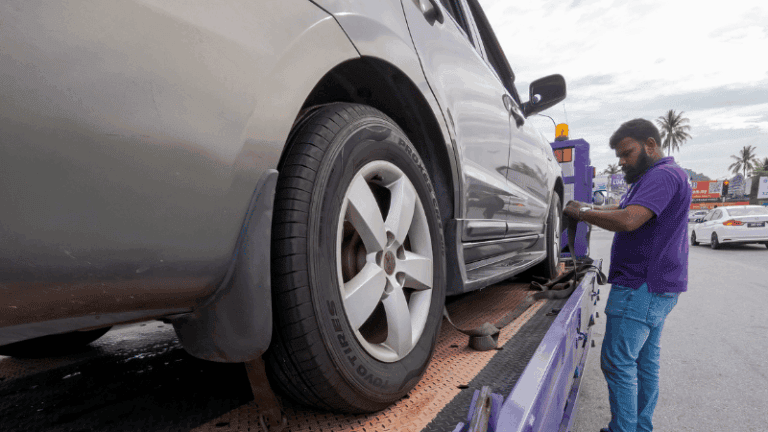
Managing a huge number of abandoned vehicles simultaneously requires towing companies to adopt standardized, electronic workflows. Failing to follow the proper procedure and timeline may result in severe application delays or legal liabilities.
Towing operators may submit multiple abandoned vehicle title applications at once. Conducting the process online would save towing companies a lot of time and effort.
Unlike individuals, towing operators are advised to confirm if the abandoned vehicle is attached to an active duty service member covered by the SCRA. Services like SCRACVS may process military verification requests in batches to save companies time and a lot of paperwork to conduct this particular step.
To avoid compliance issues, it would be efficient for towing operators to implement strict intake templates and milestone tracking logs. Creating an immutable digital intake sheet for every vehicle arriving at the yard would help track the abandoned vehicles in a company’s possession. Keeping a dedicated digital database or grid system to visually track the strict legal timeline for every vehicle in the yard may also ensure that the company follows the strict guidelines imposed.
Towing operators and storage facilities are expected to keep high-quality records for accountability and potential law enforcement audits. All documents are to be kept for at least five years, while the files ought to be filed logically (alphabetically or chronologically by VIN) in a secure, on-site office location or a protected server, and made fully available to law enforcement officers during regular business hours.

Start the Virginia Abandoned Vehicle Title Process the Right Way
Following the proper sequence of acquiring an abandoned vehicle title in Virginia may spare applicants from delays or other complications. Conducting the process digitally may simplify the entire process, and outsourcing certain procedures, such as military verification and notice requirements, may help. Companies that manage abandoned vehicles professionally may benefit from including these steps in their workflow. As long as you have the right documentation ready, running the SCRA check and initiating the law enforcement report becomes more manageable.
FAQs
How long does it take to get a title for an abandoned vehicle in Virginia?
Getting legal ownership of an abandoned vehicle in Virginia usually takes 40 to 45 days. If you follow the correct process and timeline, there should be no delays. The process might take longer when there’s an out-of-state vehicle involved.
What happens if the abandoned vehicle owner is an active-duty military member?
Abandonment procedures are to be halted until the applicant obtains a court order to proceed with obtaining the title. You may face expensive fines if the vehicle owner is protected by the SCRA.
What if the vehicle is titled in another state but abandoned in Virginia?
The applicant is to first obtain an official record of the registered owner and lienholder from the originating state. They then must officially notify the owner via certified mail before applying for a Virginia title.
Does the abandoned vehicle title in Virginia come with a clean or branded title?
The title will be clean unless the vehicle was previously branded (e.g., Salvage or Rebuilt). Virginia’s abandoned vehicle process does not automatically add a new brand.
Can the original owner reclaim the vehicle after you have applied for the title?
Yes. In most cases, the owner has up to 15 days to reclaim the vehicle. You may only proceed if the original owner doesn’t respond to the notice sent.
Do towing companies in Virginia need to verify military status for every abandoned vehicle?
Yes. Under the Servicemembers Civil Relief Act (SCRA), towing operators and storage facilities must verify the military status of every vehicle owner and lienholder before enforcing a lien or pursuing a title. Skipping this step is not a defensible oversight. If the vehicle is tied to an active duty service member and you proceed without verification, you may face federal fines under 50 U.S.C. § 3958. Services like SCRACVS can process verification requests in batches for operators managing high volume.