Pennsylvania Abandoned Vehicle Title Process: Complete Guide
An abandoned vehicle located on public or private property in Pennsylvania is subject to specific legal requirements before ownership rights can be established. Applicable procedures govern the ability to register, sell, or dismantle the vehicle. This guide outlines the process relevant to property owners, lienholders, salvors, dealers, and legal professionals involved in abandoned vehicle title matters.
The process for transferring an abandoned vehicle title differs from a standard title transfer. In Pennsylvania, this may involve a salvor or law enforcement process for towing and disposal through PennDOT, including the use of Form MV-952. In other cases, ownership may be established through a court order issued by the Court of Common Pleas. These procedures define the framework for establishing ownership and completing title transfer, registration, sale, or dismantling.
What Qualifies as an Abandoned Vehicle Under Pennsylvania Law
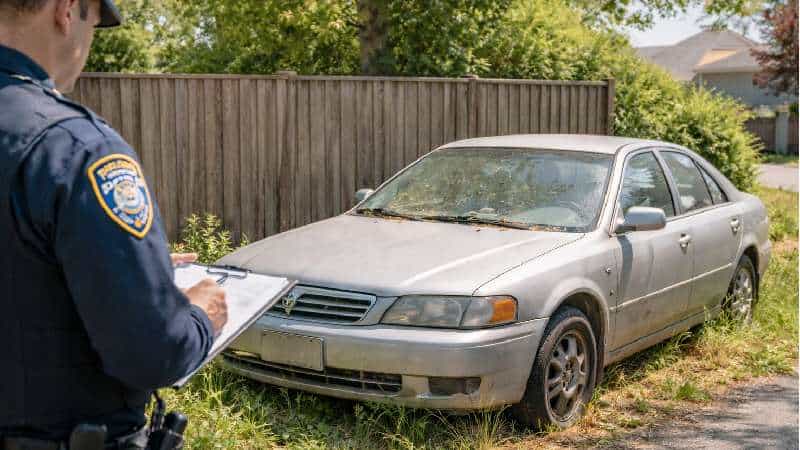
Under the Pennsylvania Vehicle Code, Section 102 (75 Pa.C.S.A. § 102), a vehicle is considered abandoned if it meets one or more defined conditions. These include:
- A physically inoperable vehicle left on public property for more than 48 hours;
- A vehicle remaining illegally on a highway or public property for more than 48 hours;
- A vehicle left unattended on or along a highway for more than 48 hours without required identification; and
- A vehicle remains on private property without the owner’s consent for more than 24 hours.
A vehicle may also be classified as abandoned if it has been towed to a salvor’s property and remains unclaimed for at least 20 days. Vehicles associated with highway or utility maintenance, or those used in normal traffic operations, are not included within this definition.
For private parking areas, abandonment may apply when a vehicle is left without consent beyond the specified timeframe.
Relevant terms include “salvor,” a PennDOT-authorized entity handling abandoned vehicles; “warehouseman,” an entity storing vehicles; “salvage vehicle,” a total-loss vehicle; and “nonrepairable vehicle,” which cannot be retitled or registered.
Vehicles Not Eligible for Abandoned Vehicle Titling
A vehicle is not classified as abandoned if it is designated as “nonrepairable” or “nonrebuildable.” Vehicles with no resale value other than for parts or scrap are also excluded from the definition. This may include vehicles issued a non-repairable title or equivalent designation by another state, as well as vehicles identified by a salvor solely for parts or scrap purposes.
These classifications indicate that the vehicle is considered a total loss and is not eligible for standard abandoned vehicle processing.
Vehicles that fall outside the definition of abandoned vehicles are typically subject to salvage or junk vehicle classification. Processing and disposition of these vehicles are handled in accordance with applicable regulations governing dismantling and scrap use.
Step-by-Step: How to Get a Title for an Abandoned Vehicle in Pennsylvania Via Court Order
Step 1 – Gather Vehicle Information
PennDOT Form 135 (“Request for Vehicle Information”) is typically completed first. The form includes sections A, C, D (ENCUMBRANCE box), and F (#4), along with a $14 processing fee. The response provides details such as the prior owner’s name and address, as well as any recorded lienholder information.
In Pennsylvania, a VIN history report is required when registering a vehicle previously titled or registered in another state or country, or when correcting a title description. This requirement applies to all vehicles except trailers, semi-trailers, mobile homes, and special mobile equipment. A National Motor Vehicle Titling Information System (NMVTIS) Vehicle History Report may be obtained from approved providers, including:
- Bumper.com
- Carvertical.com
- Checkthatvin.com
- Clearvin.com
- EpicVin.com
- GoodCar.com
- TitleCheck.us
- Vinaudit.com
- Vindata.com
- Vinsmart.com
Once the required documents are obtained, lienholders may be identified based on the Form 135 response and the NMVTIS report.
Step 2 – Prepare and File Court Documents
The next step involves completing a Pennsylvania Supreme Court Civil Cover Sheet, available on the Pennsylvania courts website. Under “Commencement of Action,” the form is filed as a “Petition,” and under “Nature of the Case,” it is designated as “Other” with “Motor Vehicle Ownership” specified.
A local county cover sheet is also completed. The case caption includes the petitioner’s name and the vehicle identification number (VIN). The process includes preparing a “Petition for Court Order on Ownership of a Motor Vehicle,” which outlines vehicle details, circumstances of acquisition, the VIN, prior owner information, and any lienholder details.
Once compiled, the court documents are filed with the Prothonotary’s Office in the county where the vehicle is located. Filing fees vary by county.
Step 3 – Provide Notice to All Interested Parties
Former owners and lienholders are entitled to notice when a vehicle is subject to an ownership petition. As part of the process, the prior registered owner and any lienholders are notified through methods such as certified mail, law enforcement or authorized official notification, and publication.
Notice is typically published in a legal journal for the county of the petitioner’s residence and the county where the vehicle is located, if different. The Pennsylvania Bar Association Lawyers Directory and Product Guide may be used as a reference for identifying appropriate publications. Proof of notice and submission is included in the court record.
Step 4 – Attend the Court Hearing
At the Common Pleas Court hearing, the petitioner testifies regarding the vehicle’s status. Evidence is presented to establish that the vehicle meets the legal definition of abandonment. The court evaluates whether the vehicle is free and clear of encumbrances and reviews the petition to determine whether the evidence supports transfer of ownership and removal of any prior interests.
The court reviews factors including how the vehicle was acquired, notice provided, and any lienholder claims. The court then issues a decision on whether ownership is granted, denied, or continued. For reference, see the court order example (PDF).
Step 5 – Submit Documents to PennDOT to Obtain the Certificate of Title
To obtain a Certificate of Title from PennDOT, the application includes the submission of the following documents:
- Certified copy of the court order
- Completed Form MV-1 (“Application for Certificate of Title”)
- Check or money order payable to the Commonwealth of Pennsylvania
- Applicable sales tax based on Fair Market Value (unless exempt)
- Title and registration fees (see Form MV-70S, “Bureau of Motor Vehicles Schedule of Fees”)
Previously abandoned vehicles are classified as “reconstructed vehicles” on Form MV-426B. The form includes an “Other” designation, where the method of acquisition is documented.
VIN verification may be required if the VIN plate is defaced or missing, in which case Form MV-32 is submitted through the Pennsylvania State Police.
Special Situations in the Pennsylvania Abandoned Vehicle Title Process
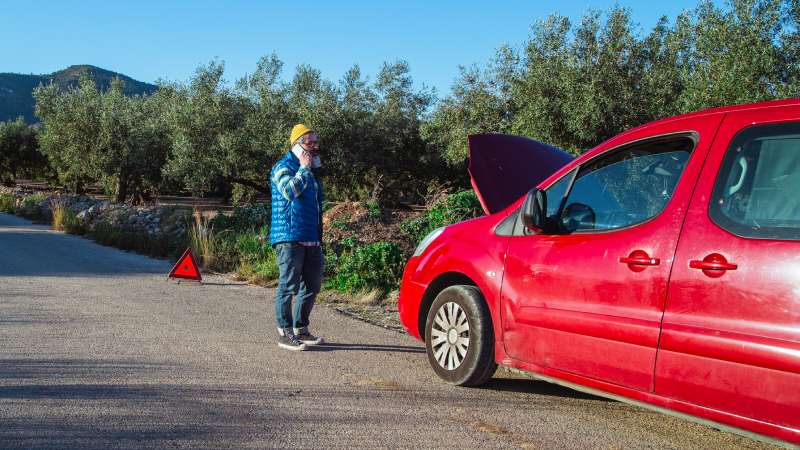
1. Vehicle Left on Private Property with No Known Owner
When an owner cannot be identified, ownership records are requested through PennDOT using Form DL-135. Additional verification may be conducted through NMVTIS to identify out-of-state records. If no owner or lienholder is located, the vehicle may be treated as abandoned under applicable procedures, with law enforcement involvement where required.
2. Vehicle Belonging to a Deceased Owner (No Probate)
If the owner is deceased and no probate is initiated, title transfer may proceed through PennDOT if the eligibility criteria are met. Documentation typically includes the original title, death certificate, Affidavit of Heirship (Form MV-39), Form MV-4ST, and a Small Estate Affidavit. A court order may be required in cases involving disputes, higher-value assets, or missing documentation.
3. Out-of-State Vehicles Found Abandoned in Pennsylvania
Vehicles titled in another state require a VIN and ownership verification. Form MV-32 is completed and confirmed through inspection by the Pennsylvania State Police. If an out-of-state title is available, it is submitted with Form MV-1. If no title exists, the process may proceed through a salvor, law enforcement route, or court petition.
4. Vehicles with Outstanding Liens
Lienholders retain a legal interest and must receive notice in ownership proceedings. Under 75 Pa. C.S. § 7305, lienholders may reclaim the vehicle within a defined period. Disputes or objections are resolved through court proceedings.
5. Vehicles with Salvage, Flood, or Branded Titles
Title branding reflects vehicle condition and may affect eligibility. Vehicles transitioning to a reconstructed title require an Enhanced Vehicle Safety Inspection by PennDOT-authorized stations.
Military Status Verification in Abandoned Vehicle Cases
What the Servicemembers Civil Relief Act (SCRA) Covers
Under 50 U.S.C. § 3952, the Servicemembers Civil Relief Act (SCRA) places restrictions on the repossession of personal property, including vehicles, in certain circumstances. These provisions apply when the obligation was entered into prior to active duty and a payment or deposit was made before the period of service. In such cases, repossession or sale may require a court order where SCRA conditions are met.
The SCRA applies to members of the Army, Navy, Air Force, Marine Corps, Coast Guard, activated National Guard, commissioned officers of the Public Health Service, and the National Oceanic and Atmospheric Administration (NOAA). In some situations, military status may be reviewed as part of determining whether SCRA provisions apply. Certain protections may continue for a limited period following active duty. As a result, a vehicle classified as abandoned may still be subject to SCRA-related restrictions depending on the individual’s service status.
Why Abandoned Vehicle Cases Intersect with SCRA
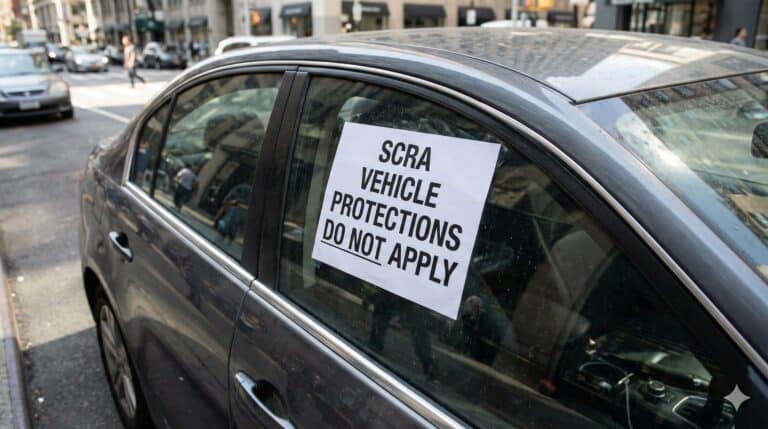
A financed vehicle left unattended during deployment or relocation may meet Pennsylvania’s definition of abandonment while also falling within the scope of the Servicemembers Civil Relief Act (SCRA). The SCRA is a federal law that places limitations on repossession, sale, or lien enforcement in certain circumstances. An absence of response from the owner does not, by itself, determine whether SCRA provisions apply. The applicability of these provisions depends on the individual’s service status and the conditions outlined in the statute.
Who Needs to Verify Military Status Before Acting on an Abandoned Vehicle
Parties with a security interest in a vehicle may conduct military status verification to determine whether SCRA provisions may be applicable. This may include entities involved in title transfer or lien enforcement processes, such as dealers handling trade-in or abandoned vehicles, tow yards, storage facilities, and impound operators.
Attorneys involved in involuntary title transfer or lien-related proceedings, as well as property owners in possession of financed vehicles, may also be part of processes where military status is reviewed as part of procedural requirements.
How to Verify Military Status: SCRAcvs
SCRAcvs provides military status verification to determine whether an individual is on active duty, based on data obtained from the Defense Manpower Data Center (DMDC), maintained by the U.S. Department of Defense. The verification process confirms active duty status as of a specified date.
Results are issued in the form of a verification report. An affidavit of military status may also be generated for use in court or compliance-related documentation. SCRAcvs does not provide personal, financial, or service-related details and does not offer legal analysis, recommendations, or advice.
Military status verification may be included as part of procedures involving repossession, lien enforcement, or title transfer, where applicable.
What a Positive vs. Negative Verification Result Means for the Title Process
If no active-duty status is identified, SCRA-related restrictions may not apply. This determination does not affect other procedural requirements associated with title issuance.
If active-duty status is identified, SCRA provisions may apply, and certain actions may require a court order depending on the circumstances. The interpretation of verification results depends on the applicable legal context and is typically handled by attorneys or compliance professionals. SCRAcvs does not interpret verification outcomes or determine how they apply to a specific case.
Conclusion
The titling of an abandoned vehicle in Pennsylvania involves a defined legal process, which may include a court petition to establish ownership. Vehicles processed through this method are typically classified as reconstructed vehicles by PennDOT and are subject to specific form and inspection requirements.
Each stage forms part of the overall procedure for establishing ownership. These steps reflect the standard framework used in abandoned vehicle title cases. SCRA-related considerations may be relevant in situations involving financed vehicles, depending on the applicable circumstances.
FAQs
How does Pennsylvania legally define an abandoned vehicle?
Under Pennsylvania Vehicle Code Section 102, a vehicle is presumed abandoned if it is physically inoperable and left unattended on public property for more than 48 hours, remains illegally on a highway for more than 48 hours, is left unattended on or along a highway for more than 48 hours without proper identification markings, or is left on private property without the owner’s consent for more than 24 hours. This presumption can be rebutted by a preponderance of the evidence.
Can I simply take possession of an abandoned vehicle on my property and get it titled in Pennsylvania?
Not directly. Pennsylvania does not allow a private property owner to simply “claim” an abandoned vehicle without a legal process. The primary options are: contacting police to have it declared abandoned and removed by a salvor; pursuing a District Court action for removal costs followed by a Sheriff’s Sale; or filing suit in Common Pleas Court to obtain a court order of ownership, which PennDOT then accepts in place of a Certificate of Title.
Why does it matter whether the vehicle owner is an active-duty servicemember?
Under the Servicemembers Civil Relief Act (50 U.S.C. § 3952), creditors cannot repossess or force the sale of a financed vehicle without a court order when the borrower is on active military duty and the contract predates their service. This protection can extend beyond the end of active duty. A vehicle that appears abandoned during or shortly after a deployment may still be legally protected. Proceeding without verifying military status can result in civil liability, DOJ enforcement actions, and potential criminal exposure.
How can a lienholder, dealer, or property owner check whether the vehicle owner is a protected servicemember?
SCRAcvs provides military status verification using Defense Manpower Data Center (DMDC) databases. The service delivers a yes/no determination of whether an individual is on active military duty or may be protected under the SCRA, with results sent by email. An optional affidavit of military status is also available. SCRAcvs does not provide legal analysis or advice — the result is factual data for use by attorneys and compliance teams. Verification costs $40, with an optional $30 FedEx affidavit mailing.
Does a negative SCRA verification result mean I can immediately repossess or sell the vehicle?
No. A negative result (not on active duty) removes one federal restriction, but it does not independently authorize repossession, sale, or title transfer. All other applicable Pennsylvania legal steps — court orders, notice requirements, PennDOT submissions — still apply. SCRAcvs does not provide legal advice on what actions are permissible in any specific case.