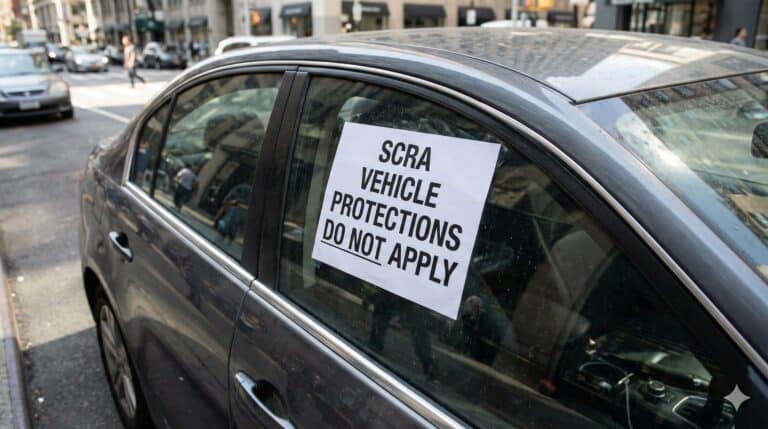

Why Military Verification is Required for Lien Sales?
Military status verification is a procedural compliance requirement in repossession, abandoned-vehicle proceedings, and tow lot lien sales. Before disposing of a vehicle through statutory lien enforcement, lienholders must determine whether the registered owner is on active duty in the military. This verification is required because federal law may restrict enforcement actions involving individuals on active duty military service.
Military status verification is commonly required during lien sales and other vehicle enforcement proceedings to support SCRA compliance. It describes the situations in which verification will be necessary, how it should be recorded, and what restrictions institutions must be aware of.
What is The Servicemembers Civil Relief Act (SCRA)

The requirement for military verification arises under the Servicemembers Civil Relief Act (SCRA), which restricts specific enforcement actions against individuals on active duty military service.
Under federal law, creditors and lienholders may be prohibited from enforcing certain lien actions, repossessing stored property, or proceeding with disposition without court order authorization if the individual is in active military service. A sale conducted without proper verification may be subject to legal challenges.
The SCRA does not automatically prohibit all lien enforcement. Instead, it conditions certain actions on the military status of the debtor at the time enforcement is initiated. Accordingly, military verification for lien sales functions as a threshold compliance step before disposition proceeds.
Why Lienholders Must Verify Active Duty Status
Under normal vehicle enforcement procedure, a towing company, repair shop, or self-storage operator claims a statutory lien against outstanding charges. A vehicle may be auctioned after obtaining a notice and after a stipulated period of time. However, if the owner is on active duty when enforcement begins, federal law may restrict or delay the sale process.
Conducting military verification before issuing the final sale notice ensures that enforcement is not proceeding in violation of federal laws. Verification must correspond to a legally relevant date, typically when the enforcement action begins. Conducting verification after the sale has occurred does not cure a compliance defect.
Additional legal restrictions may apply if enforcement begins while the registered owner is on active military duty. Going ahead without confirming status could lead to:
- Invalidated sale documentation
- Denial of transfer of title under the DMV title process
- Potential federal liability exposure
- Reversal of the transaction
Compliance Risks When Military Service Status Is Not Verified
Vehicle enforcement actions can carry operational and legal risks. The absence of documented verification may undermine defensibility in court or during regulatory review. Regulators and courts routinely evaluate whether specific conditions for compliance were implemented. Key categories of risks related to non-compliance are as follows:
Invalidated Sales and Title Defects
A court may invalidate the sale if the rights of a protected servicemember are violated. This can result in rescission of the transaction and restitution. Failure to verify military status before vehicle disposal may also create downstream title defects affecting buyers, auctioneers, and other parties involved in the transaction.
Exposure to Civil Liability and Enforcement
A violation of the SCRA may lead to statutory damages, legal costs, and government enforcement actions. Institutions can experience reputational damage and face corrective compliance measures. A documented military status check using DMDC data supports defensibility in compliance files.
Military Status Verification Requirements for Lien Sales
Legal requirements establish specific compliance controls and procedural steps. In all cases, military status must be reviewed before final enforcement actions occur. Verification should be completed before any vehicle disposal or title transfer.
1. Repossessed Vehicles
When it comes to repossession, there should be verification before the sale/ transfer of the vehicle. The time lag between the underlying obligation and active-duty service can have an impact on the SCRA protections. An active-duty status check is a documented confirmation of status at a particular date. The verification report is typically retained in the repossession file as part of compliance documentation.
2. Abandoned Vehicle Procedures
State abandoned-vehicle laws permit disposal on the expiry of the notice periods required. Federal laws, however, are still enforced in the case that the owner is an active duty servicemember. A pre-sale SCRA compliance check ensures that the abandonment process does not conflict with federal law. This will safeguard the lienholders and the participants of the auction.
3. Tow Lot Lien Sales of Vehicles
Tow operators usually impose a storage lien by means of non-judicial public auctions. Since these sales are not conducted with any court proceedings, compliance with the procedures is essential. Conducting military status verification before the auction documents that compliance steps were completed prior to vehicle disposition.
The Role of the Defense Manpower Data Center (DMDC)
Military status verification must rely on authoritative federal data sources. The Defense Manpower Data Center (DMDC), maintained by the U.S. Department of Defense, provides active-duty status records for SCRA-related verification.
Compliance programs should ensure that verification results are traceable to this official database. The following explains how DMDC data supports enforcement compliance procedures.
Authoritative Source of Active-Duty Data
The DMDC database provides active-duty status information for SCRA-related compliance checks. The DMDC military status check queries records maintained by the U.S. Department of Defense. The response to it confirms whether an individual was on active duty as of the requested date.
The result is a yes or no determination of active-duty status. It does not interpret legal protective measures or determine eligibility for relief.
Documentation For Compliance Files
Compliance files are maintained by retaining a military status certificate. Auditors, court authorities, and regulators may require proof that the status was verified before enforcement begins.
Verification certificates should be retained together with related enforcement documents. This includes a repossession legal notice, statutory lien forms, auction records, and title transfer documents. The preservation of documentation facilitates audit preparedness and enhances lien sale compliance measures.
Compliance Procedures for Military Status Verification

The exposure is minimized by organized compliance programs. Pre-disposition workflows should include verification procedures. The operational controls that support consistent military status verification in the enforcement process include the following:
Standardized Verification Protocols
Policies need to be in the form of written statements, which require the fulfillment of a DMDC military status check before authorization to make a sale. The process of responsibility and documentation should be established. The results of verification should be stamped and stored in accordance with the internal record retention requirements.
Training and Oversight
The people engaged in repossession, lien processing, and auction coordination are supposed to be trained on the SCRA compliance check strict requirements. Before the vehicles are disposed of, a supervisory check must be made to ensure that they are complete and to avoid court orders. Institutions commonly incorporate internal review processes to confirm that verification documentation is retained before the disposition.
Conclusion
Military status verification is an essential compliance step in vehicle enforcement proceedings involving repossessed, abandoned, or towed vehicles. Because the Servicemembers Civil Relief Act (SCRA) protects active-duty service members, military status must be verified before enforcement action. This step reduces legal risk and ensures compliance.
SCRAcvs provides military status verification without the need of Social Security Number to confirm whether an individual was on active duty as of a specified date. This verification supports compliance documentation during lien sale and vehicle enforcement proceedings.
FAQs
Why Is It Necessary To Check Military Status Verification Before Vehicle Disposal?
Military status must be checked because the Servicemembers Civil Relief Act (SCRA) may limit enforcement actions against persons on active military duty. Verification confirms whether federal protections may apply before enforcement begins.
Do Storage Facilities Need A Court Order To Enforce A Lien Against A Servicemember?
Yes. Under the Servicemembers Civil Relief Act (SCRA), storage operators generally must obtain a court order before enforcing a lien against a tenant who is on active duty or within 90 days after military service ends. Non-judicial lien sales may be restricted during this period.
When Should Military Status Verification Be Conducted?
Verification should be completed before enforcement actions begin, including sending a final notice, transferring title, or disposing of any vehicle involved.
What Happens If Military Status Verification Is Not Performed?
Failure to verify military status may create compliance risk. Courts or regulators may review whether a military status check was conducted before enforcement actions were initiated.