
S&K Towing Accused of Selling Servicemembers’ Vehicles in SCRA Case
The U.S. Department of Justice (DOJ) has filed a federal lawsuit against S&K Towing, a California-based towing company, citing widespread violations of the Servicemembers Civil Relief Act (SCRA) tied to the sale and disposal of vehicles belonging to active-duty military personnel.
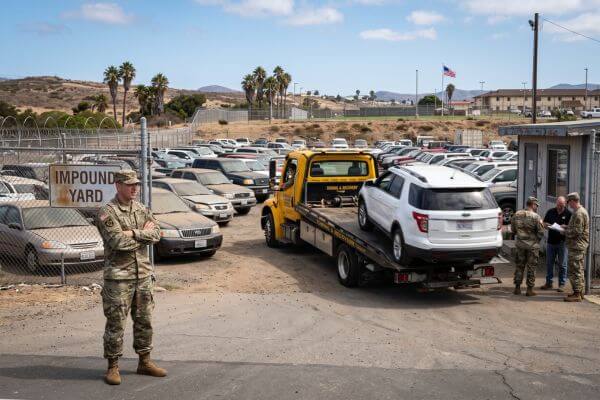
According to the complaint, the company auctioned or otherwise disposed of nearly 150 vehicles, including some owned by servicemembers deployed overseas, without meeting the legal requirements established under federal law.
Alleged Pattern of Unlawful Vehicle Disposals
The lawsuit centers on S&K Towing’s operations at Camp Pendleton, where the company had been contracted since 2020 to provide towing services for the Marine Corps Police Department.
Federal authorities state that, over several years, the company engaged in a pattern of conduct that failed to account for the legal protections afforded to servicemembers. Specifically, the DOJ claims:
- Vehicles were sold or disposed of without first obtaining court orders
- Actions were taken despite indicators that certain owners were on active duty
- Some vehicles were auctioned while servicemembers were deployed abroad
- Personal military belongings remained inside vehicles at the time of sale
The complaint also states that the company continued these practices even after being advised by a legal official at Camp Pendleton that such actions required judicial authorization.
Legal Framework and SCRA Requirements
Under the Servicemembers Civil Relief Act, businesses must follow strict procedures before enforcing liens or taking ownership actions against a servicemember’s property.
In cases involving vehicle liens or impound-related sales, a court order is generally required if the individual is protected under the Act. These protections establish procedural requirements intended to govern how legal and financial actions are handled while a servicemember is on active duty.
The DOJ states that S&K Towing did not adhere to these requirements, potentially resulting in unlawful property disposals.
Government Seeks Damages and Civil Penalties
Through the lawsuit, the Department of Justice is seeking:
- Financial compensation for affected servicemembers
- Civil penalties for alleged violations of federal law
- Additional relief as determined appropriate by the court
The case remains pending, and the allegations have not yet been adjudicated.
Breakdown in Military Status Screening
According to the complaint, a central issue in the case involves the apparent failure to verify whether vehicle owners were entitled to SCRA protections before proceeding with enforcement actions.
According to the U.S. Department of Justice complaint, S&K Towing had access to a Department of Defense system that could identify active-duty status. However, the company reportedly did not implement a consistent process for checking that information prior to auctioning vehicles.
In regulated environments where servicemember protections may apply, the absence of a structured verification process can lead to significant compliance exposure.
Why Verification Procedures Matter in SCRA Compliance
Verification of military status is a required step in certain enforcement contexts under federal law.
Failure to verify status before taking action can result in:
- Federal enforcement actions
- Financial liability
- Operational and reputational risk
Military status verification services, including systems that rely on Department of Defense data sources, are used by organizations to determine whether SCRA protections may apply before enforcement or recovery actions proceed. Implementing consistent verification protocols is part of standard compliance processes in environments where SCRA protections may apply.
Key Protections Under the Servicemembers Civil Relief Act
The SCRA establishes a range of safeguards for active-duty military personnel, particularly in civil and financial matters.
These include:
- Court order requirements before enforcing liens or disposing of property
- Protections against default judgments in civil cases
- Interest rate reductions on qualifying pre-service debts
- Legal protections that remain in effect during periods of active duty
In certain cases, these protections also extend to reservists once active-duty orders are issued.
Continued Focus on Enforcement and Accountability
This lawsuit reflects the DOJ’s ongoing efforts to enforce compliance with the Servicemembers Civil Relief Act across industries that interact with servicemembers’ financial and property rights.
As enforcement activity continues, organizations operating in these sectors are expected to maintain clear procedures, documentation standards, and verification practices that align with federal requirements.