

Military Records Search: How to Find Service Records by Name
Whether you are confirming a relative’s military service or verifying that a tenant, or an employee served then you may need reliable proof of military service. If you use a general search engine to locate an individual and nothing useful comes back. Please note that this is a very normal occurrence. Military records aren’t indexed like court filings or public property records. Real military records search through a small set of official channels instead.
TL;DR: A military records search means going through the National Archives, the Defense Manpower Data Center (DMDC), or a paid database like Fold3 or Ancestry. Records are not a general web search. Veterans and their next of kin can request the full file for free. Anyone else gets limited information unless the veteran’s file has passed the 62-year public access mark. The fastest free route is NARA’s eVetRecs system, and a standard DD214 request takes weeks, not days.
How a Military Records Search Actually Works
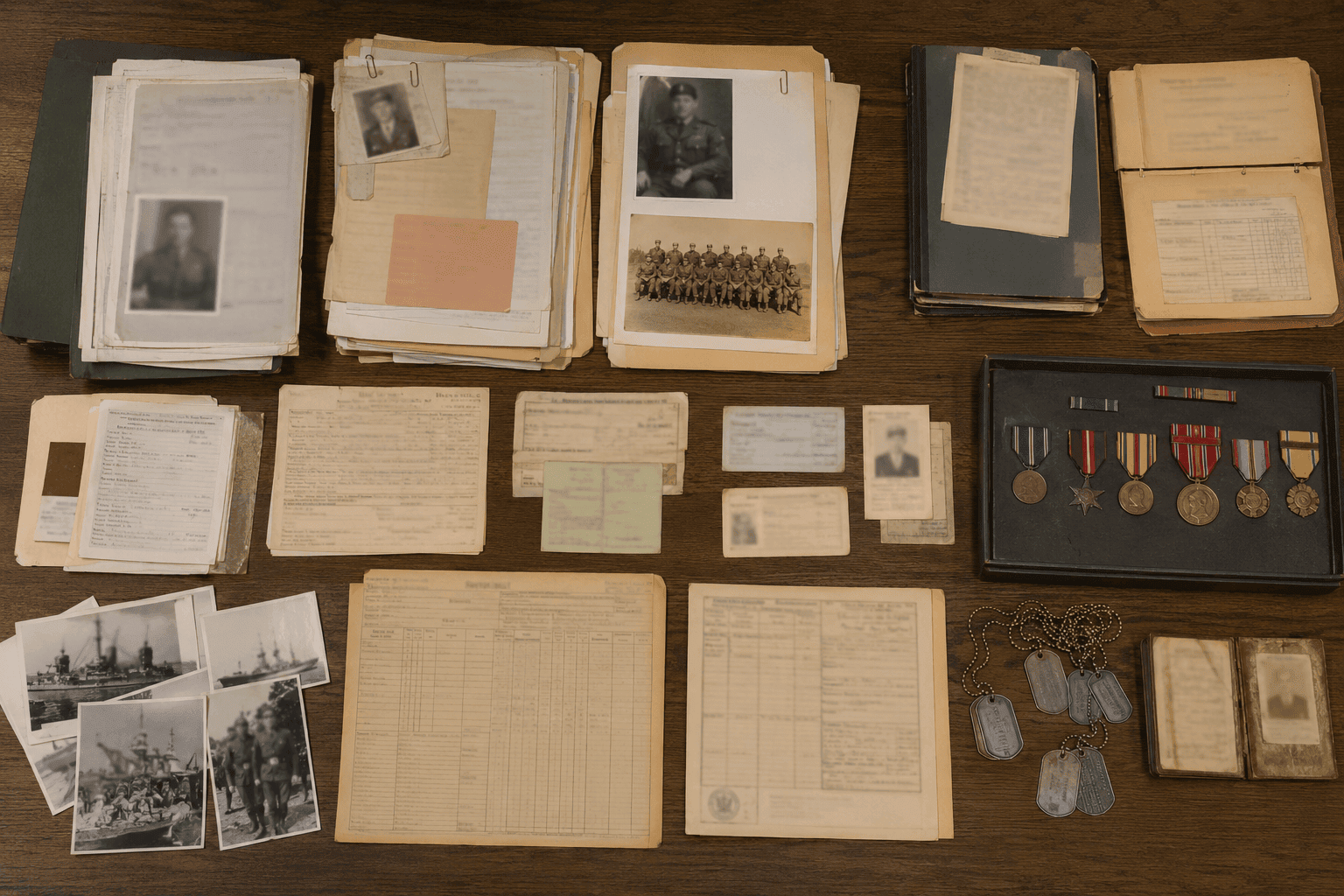
A military records search covers a wider range of documents than expected. Service records, pension files, unit histories, and draft registration cards all count as military records. Every document originates from different parts of the federal government.
The National Personnel Records Center in St. Louis holds files for anyone who left the United States Army, Navy, Air Force, Marine Corps, or Coast Guard after 1912. Anything older resides with the National Archives in Washington, D.C.
Both fall under NARA, the National Archives and Records Administration. The NARA is the closest thing to a central database for military records in the country. NARA’s holdings aren’t fully searchable online. Recent personnel files are protected by federal privacy law, meaning the search has to start with the right request form, not a search bar.
What You Need Before You Request Military Service Records
Before you request military service records, gather four pieces of information: the veteran’s full legal name including any maiden or middle name, the branch of service, an approximate range of service dates, and a service number or Social Security number if you have one. NARA staff will use these details to pull the correct individual service records out of millions of similar files. The incomplete requests get delayed or bounced back.
Eligibility matters as much as paperwork. The veteran can request their own file at any time. So can their next of kin, defined as an unremarried surviving spouse, parent, child, or sibling. Anyone outside that circle must wait until the file passes the 62-year mark, at which point it opens to the public.

Finding Military Records: Free and Paid Search Options
NARA’s eVetRecs system is not only free, but it is the best starting point for most people. You can start your records request online in about ten minutes.The system routes your submission into the same queue as mail and fax requests. State and county archives are free too, though they only cover people who enlisted or were buried in that specific area.
Paid options suit people who need faster results or who are doing broader veteran research. Fold3 and Ancestry both maintain a searchable database of digitized military records. These databases draw mostly from World War I, World War II, the Civil War, the Korean War, and Vietnam. A subscription will allow you to receive a scanned service record in minutes instead of a weeks-long request process. Independent research firms go further still: you can request a full lookup, and they’ll pull veteran records from NARA, state archives, and their own private collections on your behalf for a fee.
Between NARA’s free resources and paid research services, most people find what they need within a few weeks, whichever route they take.
Search habits shift depending on the branch. For example: someone searching for a Marine, will usually have prior knowledge that the Marine Corps sits inside the Department of the Navy. They will use this information when they search for the person they have in mind.The same logic runs across every branch.
Army and Air Force records: the National Personnel Records Center for post-1912 service, or the National Archives in Washington for anything earlier. Navy and Marine Corps records: also the National Personnel Records Center, filed jointly since the Marine Corps falls under the Department of the Navy. Coast Guard records: the National Personnel Records Center for discharged members, or the Coast Guard’s own personnel command for those still on active duty.
The request form stays the same no matter which branch you’re searching. What changes is which office ends up handling it.
Types of Service Records and What Each One Contains
Not every request is for a DD214. Federal military service records fall into a handful of categories, and knowing which one you actually need saves weeks.
Service records document enlistment, duty stations, and performance. This is the record most people mean when they say DD214, even though the form itself has changed names and formats several times since World War II.
Pension records confirm whether veterans or their survivors were eligible for a pension tied to the Revolutionary War or a later conflict. Second wives and widows sometimes qualify too, and the rules around service pensions get complicated fast.
Draft registration cards, most commonly the WWI and WWII cards, have become digitized from the NARA. This includes lists of a registrant’s birth date, address, and physical description even if that person never actually served.
Unit and regimental histories cover a whole company or regiment rather than one person. Locating military unit histories takes more digging since the files are organized by unit, not by name, but they often include after-action reports and rosters that mention individuals who don’t appear anywhere else.
Beyond these categories, other military service records exist for bounty land grants, lineage society applications, and burial records, most useful for genealogy and family history research rather than day-to-day verification.

Requesting a DD214: The Most Common Records Request
The DD214 records request is the one most people actually need, whether it’s for a job application, a home loan, or a benefits claim. You can request a copy online through eVetRecs, by mail using Standard Form 180, or by fax for emergencies.
Processing takes longer than most people expect. Standard DD214 requests typically run 65 to 90 days, and NARA has been open about the backlog behind that number. Emergency requests tied to a funeral or an urgent medical claim move faster and often come back within two weeks.
Part of the delay traces back to history. A fire at the National Personnel Records Center in 1973 destroyed an estimated 16 to 18 million Official Military Personnel Files, mostly Army and Air Force records from before 1960. NARA has spent decades reconstructing what it can from other sources, and requests tied to recent military service move through a completely separate, intact set of files, which is one reason turnaround times swing so much by era of service.
Who’s Eligible to Request Someone Else’s Military Personnel File
The rules here come down to one law: the Freedom of Information Act. FOIA gives the public a right to government records, but it carves out privacy protections for anyone who served within the last 62 years.
Before that threshold, a military personnel file is only available to the veteran, their next of kin, or someone with the veteran’s written authorization. After it, the file becomes public information, and anyone can request it, including researchers, journalists, and genealogists.
State governments layer additional access on top of the federal rules. Some states publish veteran burial and service rosters as open records, which is often the fastest way to confirm someone served without going through NARA at all.
How to Tell If Someone Served: Verifying Active Duty Status
Records requests answer historical questions. They confirm what someone did decades ago. If you need to know whether someone is serving right now, or served recently enough that FOIA still restricts their file, a records request is the wrong tool for the job.
The Defense Manpower Data Center, or DMDC, tracks active duty status using a name, Social Security number, and a status as of a date. Lenders, landlords, and employers rely on this route constantly because it returns an answer in a day rather than weeks.
The Servicemembers Civil Relief Act runs on that same underlying data. SCRA service exists specifically to confirm active duty status for legal and lending purposes, and it doesn’t require a Social Security number for every search. It’s a faster, more targeted answer than a full records request when the only question is whether someone is currently in uniform.
For more detail on confirming whether a stated period in the armed forces holds up, our guide to military verification walks through the process step by step, and it tends to get you an answer faster than piecing one together from military history archives on your own.
Where to Go Next If Your Military Records Search Comes Up Empty
A records search that comes back empty usually means one piece of identifying information is missing, not that the record doesn’t exist. Go back to the four basics: full name, branch, approximate dates, and a service or Social Security number if you have it. Most stalled requests get unstuck once that information is complete.
If your situation involves confirming someone’s current status rather than digging through history, a full NARA request is the wrong tool, and it will cost you weeks you don’t have. For background on piecing together a person’s military history from indirect evidence, that guide covers the signs worth checking when official records alone don’t settle the question.

FAQs
Can I look up someone’s military record?
Only the veteran and their next of kin have automatic access to a full military personnel file. Everyone else can request limited information, such as name, rank, dates of service, and awards, without needing the veteran’s permission, as long as the record exists and isn’t restricted under the 62-year privacy rule.
Are military records public?
Military records become fully public 62 years after a veteran’s discharge date. Before that, FOIA limits public access to a short list of basic facts, and the complete file stays restricted to the veteran and their next of kin.
Is military DD-214 public record?
Not automatically. A DD214 stays protected under federal privacy law while the veteran is alive and within the 62-year window, and only the veteran, their next of kin, or someone with written authorization can request a full copy during that time.
Is it illegal to ask someone for a copy of their DD214?
No. Employers verifying military service and organizations confirming veteran status for benefits or discounts ask for a DD214 regularly, and requesting one directly from the person who holds it is legal. What’s restricted is requesting someone else’s DD214 from NARA without proper authorization.
Are dishonorable discharges public record?
Discharge status appears on the DD214 itself, but NARA doesn’t publish discharge outcomes separately, and the same 62-year access rule applies. Before that point, only the veteran or their next of kin can see the discharge characterization on file.