SCRA Vehicle Repossession Rights: What Auto Lenders Must Know
Auto lenders handle missed payments every day, yet the moment a borrower’s military service enters the conversation, the entire situation shifts. What appears to be a simple contract issue suddenly carries the weight of the Servicemembers Civil Relief Act, a federal law designed to protect active duty service members from unfair financial pressure during military service. That shift introduces risk that most lenders never see in ordinary repossession cases.
Regulators have made it clear that repossessing a vehicle without proper SCRA protections in place is not a procedural mistake. It is a violation of federal law under 50 U.S.C. § 3952, a rule that requires creditors to secure a court order before taking a vehicle from a covered servicemember.
Lenders who understand when SCRA applies and how to verify a borrower’s military status protect themselves, their organizations, and the families who rely on these safeguards. Stay with us as we walk through the rules that matter most and show you how to approach repossession cases involving military personnel the right way.
Key Takeaways
- Lenders cannot repossess a covered servicemember’s vehicle without a court order if the loan or lease was signed before active duty and at least one payment or deposit was made.
- SCRA applies to active duty servicemembers and certain Reserve or Guard members called to qualifying service.
- If repossession is improperly executed, lenders face civil damages, attorneys’ fees, and potential criminal liability.
- Before any repossession, lenders must verify military status through the DMDC or a trusted verification provider.
- Courts reviewing SCRA repossession cases can delay proceedings, modify payments, or require return of funds to the servicemember.
- Waivers of SCRA rights must meet strict requirements, or they are invalid.
Understanding SCRA Vehicle Repossession Protections
What the Law Actually Says (50 U.S.C. § 3952)?
SCRA repossession protection rests on three specific conditions that determine whether a creditor can move forward without court involvement. These conditions outline when a servicemember is covered and when lenders must pause and seek judicial approval.
The protection applies only when all three points below are valid:
- The contract for the vehicle was signed before the borrower entered active duty.
- The servicemember made a deposit or an installment payment before military service began.
- The creditor attempts to repossess or rescind the contract during the borrower’s active duty period.
Each condition reflects the intent of the law. A borrower who financed a vehicle in civilian life and later received military orders faces new circumstances that can affect payments, deployment schedules, and overall ability to manage financial obligations.
For example, a civilian who purchases a vehicle in April and then receives orders to report for active duty in July would qualify once the first installment payment is made before service begins.
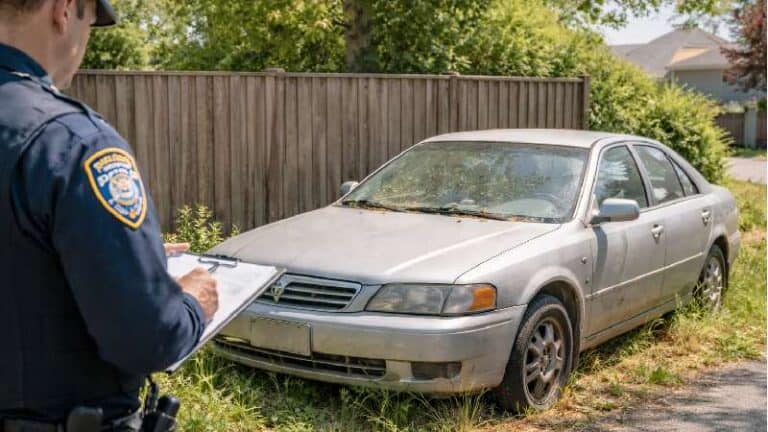
When these requirements are met, SCRA removes the option of self-help repossession entirely. This means actions such as sending a tow truck without notice, reclaiming a vehicle from a parking lot, or instructing a dealership to retrieve the car are prohibited when the borrower is protected.
This rule applies equally to financed purchases and leases, which places responsibility on auto finance companies, dealerships, and lenders to evaluate military status before taking any step.
The law also requires lenders to obtain a court order before moving forward. Courts expect creditors to disclose verified information about the borrower’s military service, usually supported by a DMDC record or verification conducted through a trusted provider. This requirement ensures that repossession decisions are reviewed in the proper legal setting and that both parties receive the fairness intended under the Servicemembers Civil Relief Act.
These safeguards show why proper verification is essential. A lender who assumes a borrower is not protected can create unnecessary legal exposure, while those who confirm status early maintain compliance and support a lawful process for servicemembers and their families.
Who Is Protected Under SCRA and When Does It Apply?
1. Eligible Servicemembers
SCRA protections apply to individuals whose military responsibilities make it harder to manage everyday financial obligations.
The most common group includes active-duty members across all branches, which encompasses those serving in the Army, Navy, Air Force, Marine Corps, and Coast Guard. Once these individuals enter active duty, they receive protections that directly affect repossession decisions.
Several additional groups also qualify under the Act:
- Activated Reserve members who receive federal orders for full-time duty.
- National Guard members called to federal service under a qualifying authority.
- Service members who experience deployments or permanent changes in station that affect their ability to manage payments.
Dependents can also receive protections in certain cases. This may include a spouse, children, or another individual who relies on the servicemember for financial support. Their coverage exists because financial challenges during military service often extend beyond the servicemember alone.
Recognizing eligibility is an essential step for lenders. Once any of these individuals appears on an account, the creditor must treat the situation as potentially protected until military status is verified.
2. When SCRA Vehicle Protections Do Not Apply
SCRA protections are powerful, but they do not cover every vehicle or every lending scenario. Lenders must understand these exceptions because they shape how repossession decisions are handled and whether a court order is required.
One standard limitation involves the timing of the contract. If the borrower signs the agreement after entering active duty, SCRA repossession protection does not apply.
In these situations, lenders may follow normal state repossession procedures, although other safeguards, such as the interest rate cap, may still influence the account. For example, an active duty servicemember who purchases a vehicle while already serving receives certain financial protections but does not receive the same repossession restrictions as someone who financed a vehicle before service.
Some vehicles also fall outside the scope of SCRA:
- Commercial vehicles that are purchased strictly for business use.
- Vehicles tied to a business entity rather than personal use.
- Specialty vehicles that support commercial or professional operations.
These situations require a case-specific review because courts look at how the vehicle is used, who owns it, and whether the loan primarily serves a personal or commercial purpose.
Another important exception involves waivers. A servicemember may sign a waiver of SCRA rights during active duty, and if the waiver meets all legal requirements, lenders may proceed without court involvement. This waiver must be voluntary, written, and executed during military service.
If any element is missing, the waiver becomes invalid, and SCRA protections remain in place.
Why Military Status Verification Is Critical for Lenders?
1. The Legal Requirement to Verify Status Before Repossession
Courts rely on accurate military status information whenever a repossession request involves a borrower who may be protected under the Servicemembers Civil Relief Act. This is why lenders must submit an affidavit that clearly states whether the borrower is in military service at the time repossession is being considered.
The affidavit becomes a formal part of the legal proceeding, so courts expect the information to be verified rather than assumed.
This requirement places responsibility on the lender to check reliable sources before taking action. An affidavit that is incomplete or based on guesswork carries serious consequences. If a lender submits incorrect information, even unintentionally, the mistake can create federal liability and open the door to civil penalties.
Courts and regulators expect lenders to make every reasonable effort to confirm a borrower’s status using dependable verification tools.
Recent enforcement actions show how quickly problems arise when verification is overlooked. In several cases, lenders repossessed vehicles without checking the DMDC or a trusted verification provider. The issue was not only the repossession itself, but the failure to verify, which transformed a routine collections step into a violation of federal law.
When lenders verify military status early, they protect their organizations from avoidable risk and ensure that every repossession decision aligns with SCRA requirements. This single step strengthens compliance and supports a fair process for both creditors and military personnel.
2. Reliable Methods of Verification
Lenders must rely on dependable sources when confirming a borrower’s military service, since courts expect verification to come from recognized and legally defensible records.
The primary resource is the Defense Manpower Data Center, commonly known as the DMDC. This federal database provides official confirmation of active duty status, and courts accept its results as authoritative evidence in SCRA-related proceedings.
A DMDC search offers date-specific information that helps lenders understand whether SCRA protections apply to a pending repossession.
Many lenders prefer to use a dedicated verification service when they need additional support beyond a basic status check. SCRACVS provides verification reports, affidavits, and batch processing options that assist auto finance companies, law firms, and other creditors who manage large volumes of accounts. These reports are structured to help lenders prepare for court proceedings and maintain a clear record of compliance.
Services like SCRACVS also reduce the risk of errors that occur when staff attempt manual searches without proper documentation.
It is important for lenders to remember that verbal claims from borrowers are not reliable sources of military status. A borrower may misunderstand their own eligibility, provide outdated information, or simply offer incomplete details during a difficult financial conversation.
Courts do not accept verbal statements as proof, and lenders who rely on them risk taking action that violates federal law.
3. Risks of Not Verifying
Failing to verify a borrower’s military status introduces significant legal and financial exposure for lenders. Courts take SCRA protections seriously, and any repossession carried out without proper confirmation can be challenged and overturned.
When this happens, the lender may be required to return the vehicle, unwind the contract action, or restore the borrower to their prior position, which often creates additional administrative and financial burdens.
Courts may also impose damages in cases of SCRA violations:
- The court ordered compensation to the servicemember
- Payment of attorneys’ fees
- Additional monetary penalties based on the severity of the violation
These outcomes are common in enforcement actions, especially when regulators find that the lender did not verify military status through the DMDC or a trusted provider.
In cases where the violation is considered intentional, federal criminal charges can be brought. The statute allows for criminal penalties when a creditor knowingly violates SCRA, which places considerable responsibility on lenders to follow the verification process carefully.
Beyond legal consequences, lenders must also consider reputational harm. A wrongful repossession involving military personnel often receives media attention and may lead to increased regulatory scrutiny across the organization.
These investigations can affect future operations and create long-term challenges that far exceed the cost of proper verification. The risks involved make verification a necessary step rather than a formality.
How Courts Handle SCRA Repossession Requests?
Courts take an active role in reviewing repossession requests involving military personnel, as SCRA protections are designed to ensure fairness during periods of active duty.
Once a lender petitions the court, the judge evaluates the borrower’s service status, financial obligations, and the impact of military duties on their ability to pay. This review often leads to a range of possible outcomes, each reflecting the goal of protecting servicemembers while still respecting the creditor’s rights.
Courts may do any of the following:
- Grant the repossession when SCRA protections do not apply or when the lender satisfies all legal requirements.
- Deny the request if military service clearly affects the borrower’s ability to manage the account.
- Delay the proceeding through an SCRA stay when duty-related obligations materially limit the borrower’s ability to respond.
- Order modified payment arrangements that better reflect the borrower’s circumstances.
- Require lenders to return certain prior payments as a condition for repossession.
- Appoint counsel when a servicemember cannot appear because of active duty responsibilities.
Waivers, Interest Caps, and Lease Termination Rights
1. Waiver Requirements
SCRA allows servicemembers to waive certain protections, but the law sets strict rules to ensure the decision is voluntary and fully informed. Courts examine these waivers carefully, which means lenders must understand exactly what makes a waiver valid and when it cannot be used.
A valid waiver must meet all of the following requirements.
- It must be in writing, not verbal or implied through conversation.
- It must be signed during active duty or after the servicemember has entered military service.
- It must clearly reference the specific SCRA rights being waived.
Any waiver signed before military service begins is automatically invalid, regardless of the circumstances. This prevents borrowers from unknowingly giving up protections at the time they sign their contract as civilians.
When a waiver is executed correctly, courts may allow lenders to move forward with repossession without the additional steps normally required under the Servicemembers Civil Relief Act.
2. The 6% Interest Rate Cap
Some financial protections under SCRA work quietly in the background, yet they can reshape an auto loan long before a lender considers repossession.
One of the most influential rules is the 6% interest rate cap, which applies to auto loans that began before the borrower entered military service. Once the servicemember provides written notice, the lender must adjust the rate for the entire period of active duty.
This adjustment is more than a courtesy:
- Any interest above six percent must be forgiven.
- Lenders cannot defer or recapture excess interest later.
- The borrower’s monthly payment must reflect the reduced cost.
Because this rule alters the structure of the loan, lenders need to review the account carefully once notice is received. A simple rate adjustment that is overlooked can later complicate payment records, delinquency calculations, or even the lender’s position in a repossession case.
3. Early Termination of Motor Vehicle Leases
Lease agreements present their own set of challenges for servicemembers, especially when military orders necessitate a sudden relocation. SCRA anticipates these disruptions by allowing eligible servicemembers to end certain vehicle leases early when they enter active duty or receive deployment or permanent change of station orders.
This right can reshape the lender’s expectations for the remainder of the contract:
- Once a qualifying lease is terminated, future installments are no longer owed.
- Proper notice and documentation must be provided.
- Early termination often prevents a repossession risk from developing.
For lenders, this protection serves as an early warning that the account may be closed sooner than expected and that future payment obligations cannot be enforced once termination is accepted. The focus shifts from collection activity to proper processing and accurate documentation.
Penalties for Violating SCRA Vehicle Protections
1. Civil, Criminal, and Regulatory Consequences
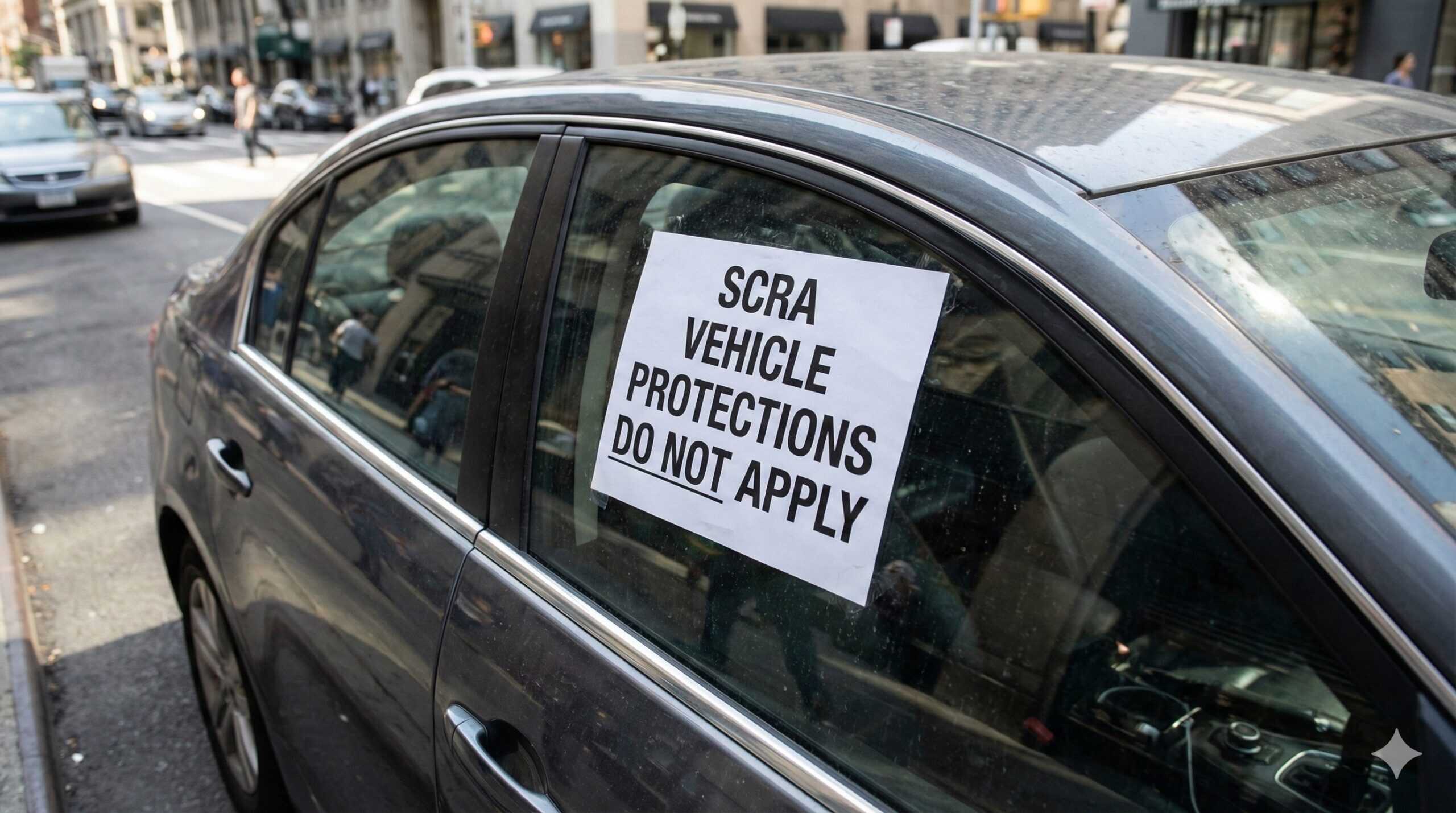
Violating SCRA repossession protection is one of the most serious compliance failures a lender can face. The Servicemembers Civil Relief Act places strict requirements on creditors because repossession directly affects a servicemember’s financial stability during military service.
When a lender moves forward without a court order, ignores verified active duty information, or overlooks clear SCRA protections, the consequences can escalate quickly.
Criminal liability is the most severe outcome, as knowingly repossessing a protected vehicle prior to obtaining a court order can result in federal criminal charges and up to one year of imprisonment
Civil penalties often involve substantial financial exposure.
- Courts may order restitution for payments, fees, or property loss.
- Lenders may be required to cover the servicemember’s attorneys’ fees.
- Punitive damages may be applicable when the violation shows a disregard for the Civil Relief Act or SCRA requirements.
SCRA enforcement also extends far beyond the courtroom:
- The Department of Justice frequently investigates illegal repossessions involving active duty service members.
- The CFPB may require policy revisions, enhanced monitoring, and new oversight procedures.
- Institutions may need to retrain staff, revise repossession workflows, and strengthen verification practices to avoid future violations.
These outcomes reflect the extent to which federal agencies protect military personnel and their families. A single failure to verify a borrower’s military status or a rushed repossession can trigger proceedings that affect the lender’s reputation, internal processes, and overall ability to manage accounts fairly.
2. Recent Real World Cases
SCRA enforcement remains a strong priority for federal agencies, and recent actions show how quickly lenders face penalties when they fail to follow SCRA protections or verify military service before repossessing vehicles.
In 2024, Hyundai Capital America was required to pay more than three hundred thirty thousand dollars after repossessing twenty-six vehicles from active duty service members without obtaining court orders. The Justice Department determined that the company violated the Servicemembers Civil Relief Act by removing vehicles that were fully protected under federal law.
In 2025, New City Funding was penalized for repossessing cars without checking DMDC records to confirm military status. Federal investigators found that the lender failed to verify active duty information, resulting in multiple unlawful repossessions and compensation requirements for affected servicemembers.
Both cases reinforce how critical proper verification and court authorization are under the Servicemembers Civil Relief Act. Lenders who disregard these steps not only violate federal law but also invite public scrutiny, financial penalties, and long-term reputational damage.
Lender Compliance Table: Required Steps Before Repossession
Before any creditor, lender, or auto finance company proceeds with a repossession, every account associated with potential military service must be reviewed for SCRA coverage.
Courts and regulators expect lenders to follow specific steps that confirm eligibility, verify service status, and document compliance before taking possession of a vehicle. Missing even one step can transform a routine action into a federal violation.
The table below outlines the essential compliance process lenders should complete before repossessing a vehicle involving a servicemember:
| Step | Requirement | SCRA – Relevant Notes |
|---|---|---|
| Verify Military Status | Must check DMDC or SCRACVS | Required for court affidavits |
| Review Contract Date | Determine pre- or post-service | Pre-service contracts fall under SCRA protection |
| Determine Payments | Confirm the deposit or first installment made before active duty | Confirms eligibility for SCRA repossession protection |
| Assess Ability to Pay | Evaluate whether military service materially affects payments | Courts may grant a stay under the Servicemembers Civil Relief Act |
| File Court Action | Cannot conduct self-repossession | Must disclose verified military status when filing |
| Execute Repossession | Proceed only after a court order | Violations can lead to penalties, restitution, or DOJ enforcement |
Protect Your Institution by Following SCRA Law
Repossession involving military personnel is not forbidden under the Servicemembers Civil Relief Act, but it is closely regulated. The law was designed to balance the lender’s right to recover property with the servicemember’s right to fair treatment while in active duty. What often causes problems for lenders is not the act of repossession itself, but the failure to verify military status early in the process.
Many of the most significant enforcement actions began with small oversights, a missing verification record, a skipped affidavit, or an assumption that a borrower’s service had ended. These errors lead to investigations, penalties, and reputational harm that could have been avoided through proper compliance planning.
To stay compliant and confident in every decision, lenders can verify a borrower’s active duty status through SCRACVS before filing affidavits or initiating repossession.
Using an established verification platform helps ensure accurate records, supports court requirements, and demonstrates good faith under federal law. Proper verification not only minimizes legal risk but also strengthens your institution’s overall compliance posture.
FAQs
Can a lender repossess a car from an active duty servicemember without a court order?
No. Under the Servicemembers Civil Relief Act, lenders and auto finance companies cannot repossess a vehicle from an active duty servicemember without first obtaining a valid court order. This protection applies when the borrower signed the contract and made at least one installment payment before entering military service. Ignoring this requirement is a violation of federal law and can result in civil penalties, restitution, attorneys’ fees, and even criminal liability for knowingly violating SCRA repossession protection.
Does SCRA apply to auto loans opened after entering active duty?
Generally, no. SCRA protections for repossession apply only to financial obligations that began before the servicemember entered active duty. If the borrower financed or refinanced a vehicle after starting military service, the loan falls under regular state repossession laws, although the six percent interest rate cap may still apply. Lenders should review the contract date carefully to confirm whether the borrower’s military service triggers SCRA coverage before taking any action.
Are leased vehicles covered under SCRA repossession rules?
Yes. Leased vehicles receive the same protection as financed vehicles when the lease was signed before the servicemember entered active duty. Creditors cannot repossess a leased vehicle without a court order if the servicemember made a deposit or first payment before service began. These SCRA protections prevent unlawful repossession during military service and help safeguard the borrower’s financial obligations while deployed or under permanent change of station orders.